
Are There Any Tools That Can Help Automate Procurement Insights and Supplier Performance Tracking?
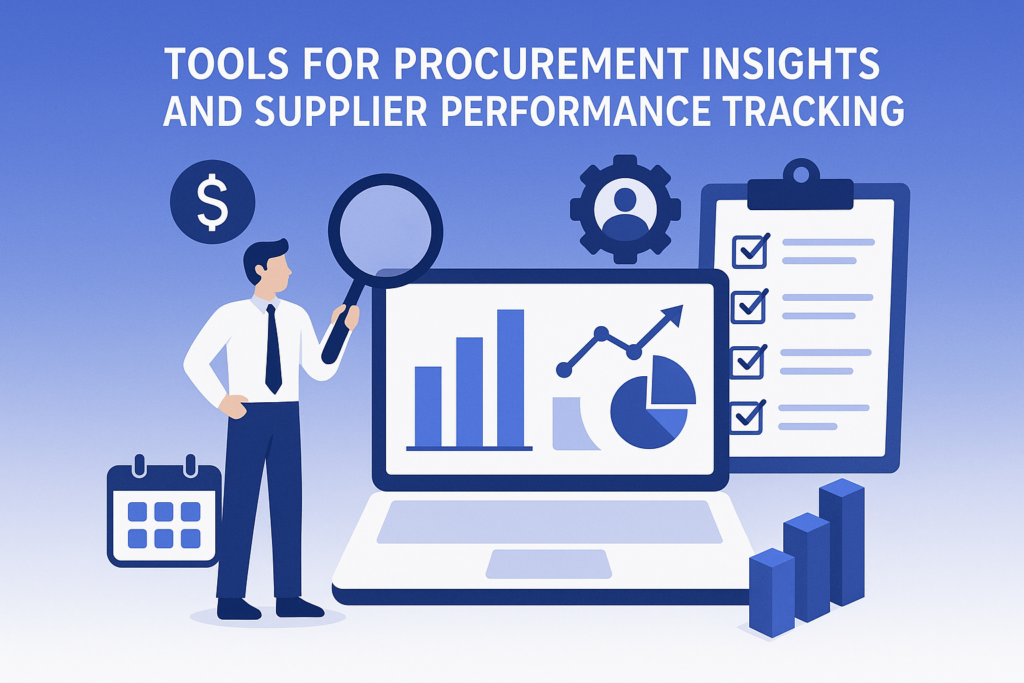
Specialized software solutions exist to fully automate procurement insights and supplier performance tracking, utilizing advanced analytics, AI, and machine learning to transform raw data into actionable, real-time strategic intelligence. These platforms, often referred to as procurement analytics platforms or supplier performance management tools, consolidate spend data, vendor quality metrics, and risk factors into centralized dashboards, enabling procurement teams to move from reactive reporting to proactive, data-driven decision-making.
The State of Automated Procurement: Key Industry Statistics
The shift toward automated procurement insights tools and data-driven supplier management is accelerating, driven by the need for resilience and cost control in complex global supply chains.
- According to Fortune Business Insights (May 2025), the global procurement analytics market size was valued at USD 4.86 billion in 2024 and is projected to reach USD 21.50 billion by 2032, exhibiting a Compound Annual Growth Rate (CAGR) of 20.3% during the forecast period.
- Recent research from Deloitte’s 2025 Global CPO Survey reveals that procurement executives see the greatest value from generative AI in enhanced decision-making (57.68%).
- Research by AI at Wharton (November 2024) found that nearly three in four leaders (72%) now use Gen AI weekly, with companies reporting a 130% increase in AI spending since 2023.
What are Automated Procurement Insights Tools?
Automated procurement insights tools are sophisticated software platforms that collect, cleanse, categorize, and analyze an organization’s purchasing data from disparate systems to generate actionable intelligence. These procurement analytics platforms go beyond basic spend reporting to apply advanced statistical modeling and machine learning, providing insights into cost savings, risk mitigation, and compliance.
What is the primary function of a procurement analytics platform?
The primary function of a procurement analytics platform is to provide a single, unified view of all enterprise-wide spend and supplier activity by consolidating data from ERP, P2P, and contract management systems. This unified view uncovers hidden savings opportunities, identifies maverick spend, and gives procurement teams the necessary leverage for strategic negotiations and optimal sourcing decisions.
Key Features of Advanced Procurement Analytics Platforms
Effective procurement analytics platforms offer a comprehensive suite of features that move analysis from descriptive (what happened) to prescriptive (what should we do). These capabilities are essential for organizations seeking a competitive advantage through data-driven procurement.
Granular Spend Analysis and Classification
- AI-Powered Categorization: Automatically classifies and normalizes spend data across all business units into a consistent taxonomy, eliminating manual errors and providing 100% spend visibility.
- Maverick Spend Detection: Automatically flags purchases made outside of approved contracts or channels, allowing procurement to enforce compliance and recapture value leakage.
- Price Benchmarking: Compares actual purchase prices against market benchmarks, contract terms, or industry peers to identify cost-saving opportunities and negotiation targets.
Predictive and Prescriptive Analytics
- Demand Forecasting: Uses historical data and external market trends to predict future spending needs and potential supply shortages, enabling proactive inventory and budget management.
- Risk Modeling: Monitors supplier financial health, geopolitical factors, and market signals in real-time to predict the likelihood of nonperformance or disruption.
- Scenario Simulation: Allows procurement professionals to model the cost and risk impact of various sourcing decisions, such as consolidating suppliers or shifting to a new region, before execution.
Real-Time Reporting and Visualization
- Customizable Dashboards: Provides role-based dashboards for different stakeholders (CPOs, category managers, finance) to track key performance indicators (KPIs) like Spend Under Management, Cost Avoidance, and contract compliance.
- Natural Language Queries (NLQ): Allows non-technical users to ask complex questions in plain English (e.g., “Show me the top 5 suppliers in the last quarter whose on-time delivery dropped below 95%”), receiving immediate, visualized answers.
Integrating Supplier Performance Tracking Software
Supplier performance tracking software is a critical component of the overall procurement analytics ecosystem. It systematically collects, measures, and analyzes supplier performance against mutually agreed-upon key performance indicators (KPIs) to ensure quality, reliability, and continuous improvement.
What is the goal of supplier performance management tools?
The goal of supplier performance management tools is to transform the supplier relationship from a transactional interaction into a strategic partnership. This is achieved by centralizing all supplier data quality scores, on-time delivery rates, compliance documents, and innovation metrics to generate objective, data-backed scorecards that foster constructive collaboration and drive superior outcomes.
Crucial KPIs Tracked by Supplier Performance Management Tools
Advanced platforms track both hard and soft metrics to provide a holistic view of supplier health and value.
Hard Metrics (Quantitative):
- On-Time Delivery (OTD): The percentage of orders delivered by the committed date.
- Defect Rate/Quality Score: The rate of rejected goods or services (e.g., Parts Per Million/PPM).
- Order Accuracy/Fill Rate: The percentage of orders that are complete and correct upon arrival.
- Cost Variance: The difference between the contract price and the actual invoice amount.
Soft Metrics (Qualitative):
- Responsiveness/Communication: Measured by issue resolution time or response time to inquiries.
- Adaptability/Flexibility: A subjective score reflecting the supplier’s ability to adjust to sudden changes in demand or specifications.
- Innovation/Collaboration: Tracking joint development initiatives or value-added proposals.
- ESG and Compliance: Monitoring adherence to ethical, social, and environmental standards, and tracking mandatory certifications.
The Transformative Benefits of Automated Procurement
Adopting automated procurement insights tools and integrated supplier performance tracking software delivers significant, measurable value that extends beyond simple cost savings.
1. Enhanced Supply Chain Resilience and Risk Mitigation
By continuously monitoring the financial stability and operational performance of key suppliers, these systems provide early warning alerts for potential disruptions. This allows procurement teams to implement contingency plans, reduce over-reliance on single sources, and build a more resilient supply base.
2. Strategic Cost Savings and Negotiation Leverage
Automated analytics identify fragmented spend and opportunities for supplier consolidation, giving procurement the volume leverage needed for significant discounts. Furthermore, detailed Total Cost of Ownership (TCO) analysis allows for better long-term sourcing decisions, moving beyond the simple purchase price.
3. Improved Compliance and Policy Enforcement
The software automatically tracks contract terms, expiration dates, and regulatory requirements (like ESG standards or diversity quotas). It immediately flags off-contract purchases and compliance breaches, ensuring alignment with internal policies and external legal mandates.
4. Fostering Strategic Supplier Relationships
Objective, data-driven performance scorecards facilitate more productive conversations with suppliers. Instead of contentious negotiations, the focus shifts to collaborative improvement plans, where both parties work together to reduce inefficiencies and foster joint innovation.
Leading Procurement Analytics Platforms and Tools
The market for automated procurement insights tools includes established Source-to-Pay (S2P) suites with strong analytics modules and specialized analytics platforms.
| Platform Type | Example Vendors | Core Strength/Focus |
|---|---|---|
| End-to-End S2P Suites | SAP Ariba, Coupa, Jaggaer, GEP Smart, Ivalua | Comprehensive source-to-pay workflow automation; strong supplier network/integration. |
| AI-Focused Analytics | Lumi AI, Zycus, Sievo | Deep, granular spend analysis; predictive and prescriptive AI-driven insights; data normalization. |
| Specialized Negotiation | Pactum | AI-driven autonomous negotiation for tail spend and contract terms optimization. |
| Diversity & Compliance | STARS | Specialized Tier 1 & Tier 2 supplier diversity reporting, compliance tracking, and benchmarking. |
Case Study Example: Global Pharmaceutical Company
A Fortune 200 pharmaceutical company leveraged an AI procurement platform to manage its clinical trials journey, according to research by AIMultiple. The implementation of AI-enabled contract management and supplier tracking:
- Streamlined vendor integration, allowing for faster onboarding of specialized research suppliers.
- Expedited drug development by ensuring contract risks were flagged and mitigated early.
- Improved compliance by automatically structuring and analyzing contract, invoice, and purchase order data to identify non-compliance.
This highlights the tool’s ability to drive strategic outcomes in high-stakes environments, far beyond basic purchasing.
Quick Facts: Key Takeaways for Procurement Automation
- Primary Tool Category: The overarching solution is often referred to as a procurement analytics platform or an integrated S2P suite.
- Core Technology: AI and machine learning are critical for automated spend classification, risk modeling, and generating predictive insights.
- Snippet Answer: Automated procurement insights tools provide real-time, consolidated visibility into spend, contract compliance, and supplier performance, shifting the procurement function from reactive reporting to strategic, data-driven decision-making.
- Key Benefit of SPM: Supplier performance management tools use objective, data-backed scorecards to improve supplier quality, ensure on-time delivery, and strengthen collaborative relationships.
- Future Trend: The market for these tools is projected to grow significantly, driven by the increasing complexity of global supply chains and the need for proactive risk management.
Conclusion: Elevating Procurement to a Strategic Function
The era of manual data compilation in procurement is rapidly concluding. Automated procurement insights tools and sophisticated supplier performance tracking software are no longer luxury items; they are essential technologies that grant organizations complete command over their spending, risk exposure, and supplier relationships. By leveraging the power of AI and machine learning, these platforms empower Chief Procurement Officers (CPOs) to transition from managing transactions to executing high-impact strategic initiatives. The result is a more resilient supply chain, verifiable cost savings, and a procurement function that is a strategic driver of overall business value.
