

Why Supporting Small Businesses Is a Smart Procurement Strategy for Supplier Diversity and Growth
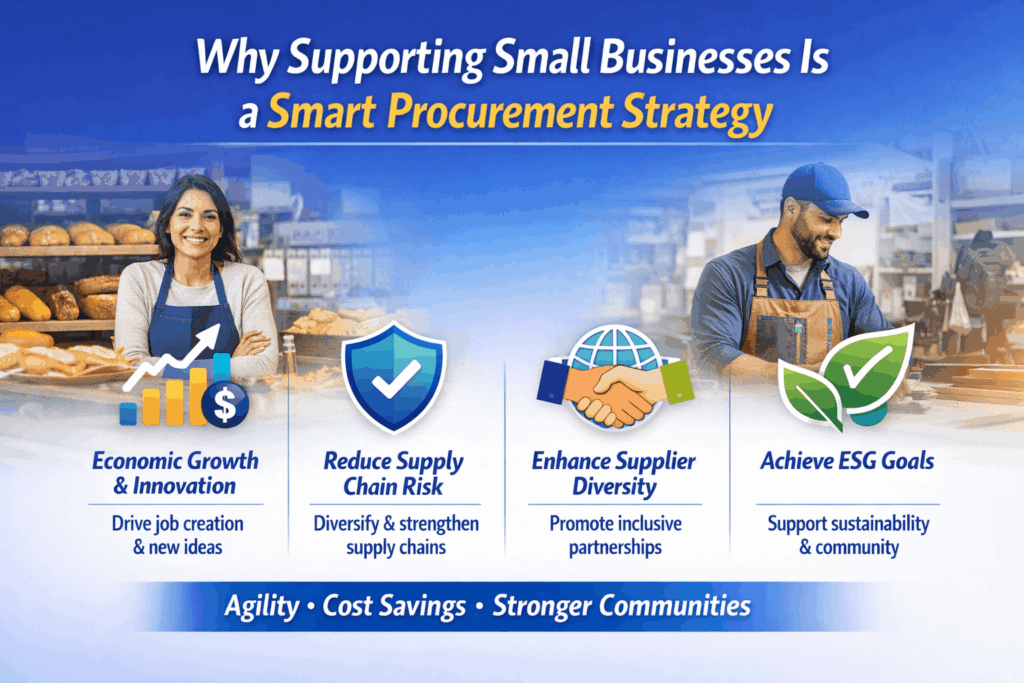
Supporting small businesses is a smart procurement strategy because it reduces supply chain risk, drives innovation, strengthens supplier diversity, and delivers measurable economic impact. Companies that prioritize small business procurement often gain greater agility, improved cost efficiency, and stronger community relationships while meeting ESG and diversity goals.
What Is Small Business Procurement in Supplier Diversity?
Small business procurement is the practice of intentionally sourcing goods and services from independently owned businesses as part of a company’s supplier diversity strategy. It helps organizations expand their supplier base, increase competition, and create economic opportunities for local and diverse enterprises.
Supplier diversity programs often include small, minority-owned, women-owned, veteran-owned, and disadvantaged businesses. By integrating small business procurement into sourcing strategies, companies create more resilient and inclusive supply chains.
Why Supporting Small Businesses Strengthens Procurement Strategy
Supporting small businesses is not just a social initiative. It is a strategic business decision that impacts cost control, innovation, risk mitigation, and regulatory compliance.
1. Small Businesses Drive Economic Impact and Innovation
Small businesses are a cornerstone of economic growth and job creation.
According to Forbes, small businesses accounted for 99.9% of all U.S. businesses and employed 61.6 million people, representing 45.9% of the private workforce.
According to Statista, 2024, small and medium-sized enterprises represent over 90% of businesses worldwide, underscoring their global economic importance.
When procurement teams partner with small businesses, they gain access to niche expertise, faster innovation cycles, and highly responsive service models. Smaller suppliers often adapt more quickly to changing project needs compared to large, bureaucratic organizations.
2. Supplier Diversity Improves Financial Performance
Investing in supplier diversity, including small businesses, can directly influence company performance.
Organizations with mature supplier diversity programs reported up to 133% greater return on procurement investments compared to peers with less developed programs.
While supplier diversity is often viewed through a social lens, procurement leaders increasingly recognize its financial value. Engaging small businesses enhances competitive bidding, encourages cost transparency, and drives value-added solutions.
3. Small Business Procurement Reduces Supply Chain Risk
Supply chain disruptions have exposed vulnerabilities in over-concentrated sourcing models.
87% of organizations experienced a disruptive supply chain event in the past year, emphasizing the need for diversified supplier networks.
Relying on a limited group of large suppliers increases risk exposure. In contrast, supporting small businesses diversifies vendor portfolios and reduces dependency on single-source providers.
Benefits include:
- Greater geographic distribution
- Reduced dependency on single suppliers
- Improved responsiveness during disruptions
- Increased competition and flexibility
A diversified supplier ecosystem strengthens business continuity planning and crisis response capabilities.
How Small Business Procurement Supports ESG and Compliance Goals
Environmental, Social, and Governance metrics are becoming central to corporate strategy. Supplier diversity plays a measurable role in ESG reporting.
Why Is Small Business Procurement Important for ESG?
Small business procurement supports ESG goals by promoting economic inclusion, community development, and equitable access to opportunities. It demonstrates measurable social impact while aligning with government contracting requirements and corporate sustainability commitments.
According to the U.S. Federal Government, 2023, 28.4% of federal contract dollars were awarded to small businesses, exceeding the government-wide target.
For companies working with public sector agencies or regulated industries, supporting small businesses is not optional. It is often a contractual requirement.
Key Benefits of Supporting Small Businesses in Procurement
Below are measurable advantages organizations experience when prioritizing small business procurement.
Cost Efficiency Through Competitive Bidding
Small businesses often operate with leaner structures, enabling competitive pricing and flexible contract terms.
Faster Decision-Making and Agility
Unlike large corporations with multiple approval layers, small businesses can pivot quickly to meet urgent needs.
Stronger Community Relationships
Investing in local small businesses stimulates regional economies, which can enhance brand reputation and stakeholder trust.
Innovation and Specialized Expertise
Small enterprises frequently specialize in emerging technologies, niche services, or highly technical skill sets.
Quick Facts About Small Business Procurement
- 99.9% of U.S. businesses are small businesses
- 45.9% of the U.S. workforce is employed by small businesses
- 28.4% of federal contract dollars went to small businesses in 2023
- Organizations with mature supplier diversity programs report stronger procurement ROI
- Diversified supplier networks reduce operational risk
Case Example: Integrating Small Businesses into Contingent Staffing
In contingent staffing and workforce solutions, small and specialized suppliers can play a crucial role. Many niche staffing firms provide highly targeted talent pools, particularly in IT, healthcare, engineering, and government sectors.
For organizations implementing MSP or VMS models, integrating small business suppliers into vendor networks:
- Expands access to diverse talent pipelines
- Improves time-to-fill metrics
- Enhances compliance with supplier diversity requirements
- Increases competition among vendors
Companies that adopt flexible models such as staff augmentation or talent-on-demand can seamlessly include qualified small business partners while maintaining performance standards.
Best Practices for Building a Small Business Procurement Strategy
1. Set Clear Supplier Diversity Goals
Define measurable targets for small business participation. Align these goals with ESG metrics and executive accountability.
2. Leverage Data and Supplier Mapping Tools
Use supplier analytics platforms to identify small business opportunities across spend categories.
3. Simplify Onboarding Processes
Complex procurement systems often discourage small suppliers. Streamlining qualification and compliance steps increases participation.
4. Develop Long-Term Partnerships
Rather than transactional contracts, establish mentorship programs and multi-year agreements to foster growth and innovation.
5. Track and Report Outcomes
Measure spend, performance metrics, and economic impact. Publicly reporting supplier diversity progress enhances credibility.
Comparison: Traditional Procurement vs Small Business Procurement Strategy
| Factor | Traditional Procurement | Small Business Procurement Strategy |
|---|---|---|
| Supplier Base | Limited large vendors | Diverse mix including small businesses |
| Risk Exposure | Higher concentration risk | Lower risk through diversification |
| Innovation | Moderate | High due to niche expertise |
| ESG Alignment | Limited | Strong social impact integration |
| Agility | Slower | Faster and more responsive |
This comparison highlights how small business procurement adds strategic value beyond cost savings.
The Long-Term Strategic Advantage
Organizations that embed small business procurement into their sourcing frameworks gain long-term competitive advantages:
- Stronger brand reputation
- Increased innovation velocity
- Improved stakeholder trust
- Greater supply chain resilience
- Enhanced regulatory compliance
In a volatile global market, flexibility and diversity are essential. Small businesses provide both.
Conclusion: Make Supplier Diversity a Competitive Advantage
Supporting small businesses is more than a corporate responsibility initiative. It is a strategic procurement decision that strengthens supply chains, improves financial outcomes, and advances ESG objectives. Companies that prioritize small business procurement gain agility, innovation, and measurable economic impact.
If your organization is looking to strengthen its supplier diversity strategy and integrate qualified small business partners into your procurement model, contact STARS today to explore tailored solutions that drive measurable results.
Help Center
Frequently asked questions
Supporting small businesses strengthens supplier diversity, reduces supply chain risk, improves innovation, and supports ESG goals. It also creates competitive pricing opportunities and enhances economic inclusion while aligning with government and corporate compliance requirements.
Small business procurement expands opportunities for minority-owned, women-owned, veteran-owned, and disadvantaged enterprises. By intentionally allocating spend to smaller suppliers, organizations create more inclusive supply chains and measurable economic impact.
Yes. Small businesses often provide competitive pricing, flexible contracts, and specialized services that improve overall value. Diversified sourcing also reduces costly disruptions caused by over-reliance on large vendors.
