
A Step-by-Step Guide to Building Your Supplier Vetting Process
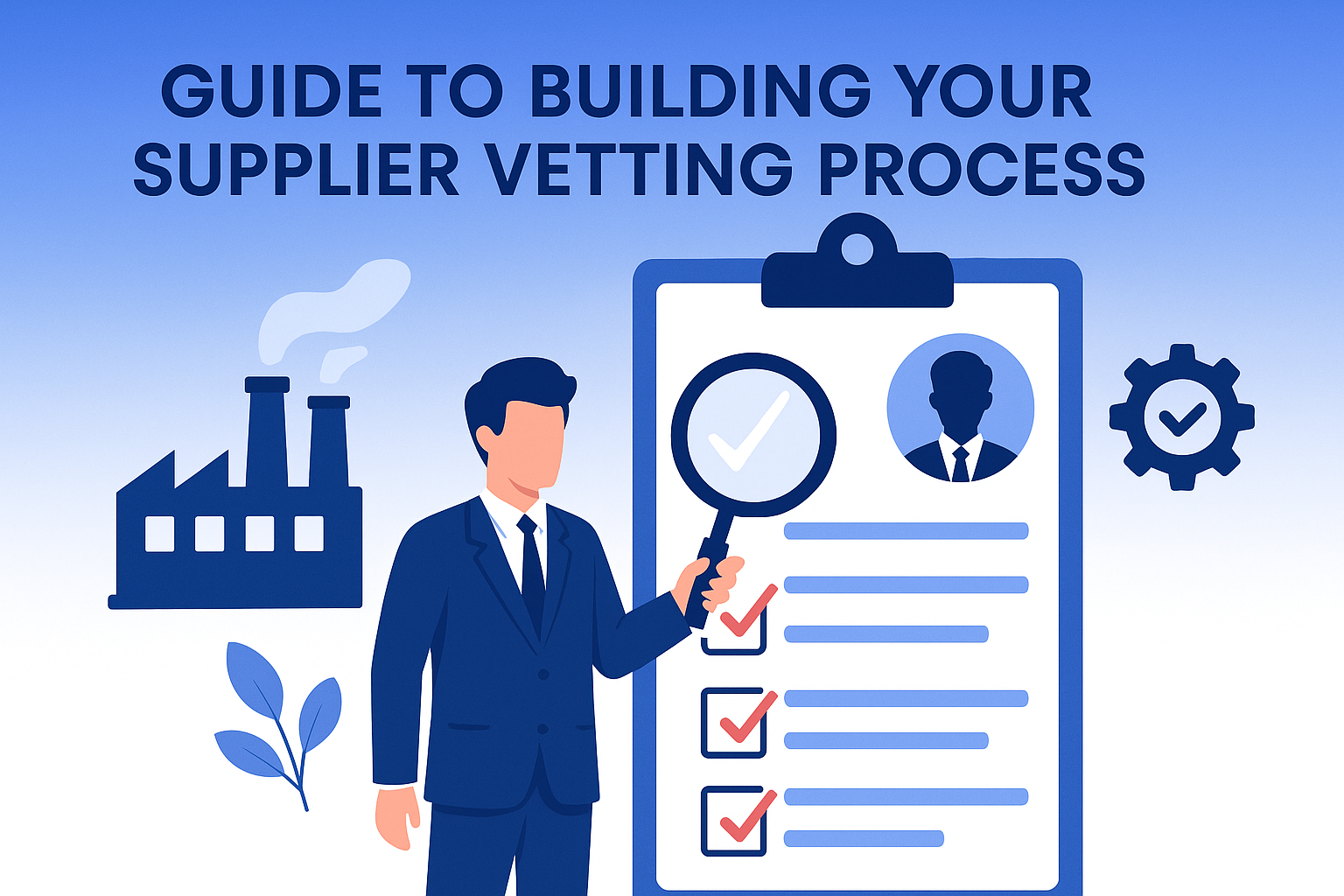
What Is Supplier Vetting?
Supplier vetting is the process of evaluating and verifying suppliers before you start working with them. The goal is to make sure your suppliers meet your company’s standards not just in price, but in quality, reliability, compliance, and integrity.
Think of it as a background check for your business partners.
Without proper vetting, you could face:
- Late deliveries or poor-quality materials
- Compliance violations or unethical practices
- Financial loss from supplier bankruptcy
- Reputational damage from association with unreliable vendors
A clear vetting process protects your business and helps you build a supply chain you can trust.
5 Essential Steps to Create an Effective Supplier Vetting Process
Step 1: Define Your Supplier Vetting Objectives
Purpose: Establish clear goals, scope, and criteria for your vetting process so you can assess suppliers consistently and align your approach with overall business priorities.
Clarify Your Goals and Risk Appetite
- Define your main objectives, such as quality assurance, compliance, cost control, or sustainability.
- Identify acceptable levels of risk across areas like financial, operational, reputational, or legal exposure.
- Example: “We will only engage suppliers with no major safety incidents in the past five years and proven financial stability.”
IdentifySupplier Tiers and Criticality
- Segment suppliers into tiers based on the impact of their goods or services on your business.
- Tier 1 suppliers are critical and require deeper vetting, while Tier 3 suppliers pose lower risk.
- This segmentation helps you focus resources efficiently and prioritize oversight where it matters most.
Develop Your Supplier Evaluation Checklist
- Include key categories: capabilities, financial health, compliance, cybersecurity, ESG (environmental/social/governance), and performance history.
- Apply established frameworks like the 10C Model (character, capacity, commitment, control, consistency, etc.).
- Example checklist items:
- Financial solvency and profitability
- Valid certifications (e.g., ISO, industry-specific)
- Cybersecurity and data protection policies
- Litigation or regulatory history
- ESG or sustainability alignment
Step 2: Supplier Screening and Onboarding
Supplier screening and onboarding involve reviewing essential information, conducting due diligence, assigning risk levels, and deciding whether to approve the vendor. This step ensures only qualified and compliant suppliers move forward to contract stage.
Request Key Documentation
- Financial statements and credit ratings
- Company registration, licenses, and certifications
- References and past performance records
- Questionnaires on cybersecurity, data handling, and ethical practices
Perform Background Checks and Risk Assessment
- Use third-party tools and public databases to verify legal, financial, and compliance standing.
- Supplier management platforms provide real-time insights into a vendor’s financial stability and operational capacity.
- Assign risk scores based on findings, high-risk suppliers undergo deeper review.
Approve Supplier and Formalize Contract
- Approve qualified suppliers and formalize contracts that define expectations, performance metrics, and audit rights.
- High-risk suppliers should have additional clauses for oversight such as stricter service-level requirements or audit frequency.
- Complete onboarding by granting necessary system access and communicating your standards.
Step 3: Supplier Evaluation and Performance Monitoring
After onboarding, continuous evaluation ensures suppliers maintain compliance and performance standards while helping identify emerging risks early.
EstablishPerformance and Risk KPIs
- Track delivery times, quality defect rates, cost deviations, and compliance performance.
- Measure key risk indicators (KRIs) such as financial downgrades, cyber incidents, or legal disputes.
Conduct Scheduled Audits and Reviews
- Audit critical suppliers annually or semi-annually based on tier classification.
- Use vendor scorecards to identify declining performance or risk signals.
- Re-assess key checklist areas including financial health, delivery reliability, and ESG performance.
Implement Continuous Monitoring
- Deploy monitoring tools for real-time alerts on sanctions, credit changes, or negative media.
- Use standardized vendor security questions and risk frameworks to stay proactive.
Manage Supplier Risk and Relationship Changes
- Initiate corrective actions when performance declines.
- Off-board or replace suppliers that repeatedly fail to meet compliance or quality expectations.
- Keep all records and communications documented for accountability and audits.
Comparison Table: Ad Hoc Vetting vs Continuous Monitoring
| Feature | Ad Hoc Vetting | Continuous Monitoring |
|---|---|---|
| Timing | One-time at onboarding | Ongoing throughout supplier lifecycle |
| Risk Identification | Limited to initial review | Captures emerging risks (cyber, ESG, financial) |
| Performance Review Frequency | Irregular | Regular, scheduled reviews |
| Responsiveness | Reactive | Proactive |
| Impact on Resilience | Lower | Significantly higher |
Step 4: Vendor Risk Assessment and Mitigation
A vendor risk assessment identifies potential threats related to cybersecurity, compliance, operations, or finance and defines actions to mitigate those risks before they disrupt your supply chain.
IdentifyRisk Domains
- Cybersecurity: Evaluate data security measures and system access protocols.
- Operational: Review production capacity, continuity plans, and logistics dependencies.
- Financial: Examine solvency, debt, and credit reports.
- Compliance and ESG: Check for regulatory violations and sustainability practices.
- Reputation: Research public perception and potential brand risks.
Assess and Score Risk
- Use a structured formula (Risk = Likelihood × Impact).
- Categorize risks as low, medium, or high.
- Apply stricter controls for higher-risk suppliers.
Mitigate and Monitor
- Strengthen contract clauses for high-risk vendors.
- Require insurance coverage, certifications, or performance bonds.
- Diversify sourcing to avoid dependency on a single supplier.
- Continue monitoring and trigger response plans when thresholds are exceeded.
Case Study Example
A manufacturing company sourced key components from a new vendor without detailed vetting. Months later the supplier faced a compliance violation that halted production. After establishing a formal vetting and risk-monitoring framework the company reduced supply interruptions and prevented similar incidents.
Step 5: Supplier Offboarding and Exit Strategy
When a supplier no longer meets expectations, a structured offboarding process protects data, ensures continuity, and allows a smooth transition to a new partner.
Define Exit Criteria and Triggers
- Set clear conditions for termination such as performance failure, repeated violations, or risk escalation.
- Include exit and data-handling clauses in supplier contracts.
Secure Handover or Termination
- Retrieve or destroy company data held by the supplier.
- Transfer services to replacement suppliers without disrupting operations.
- Confirm all financial and legal obligations are resolved.
Conduct Post-Exit Review
- Document lessons learned and identify early warning signs missed during vetting.
- Update your supplier evaluation checklist to strengthen future reviews.
How STARS Supports Your Supplier Vetting Process
The STARS platform is designed to directly support every step of a robust supplier vetting and management lifecycle.
Streamlined Supplier Registration and Onboarding
- STARS provides customizable registration forms and workflows to capture supplier data, certifications, and compliance information efficiently.
- Real-time status updates and automated validation reduce manual effort and speed up approvals.
Data Enrichment & Accuracy
- STARS automates data scrubbing and enrichment to ensure supplier profiles are accurate and up-to-date supporting better risk assessment and decision making.
- Duplicate or outdated entries are cleaned, helping maintain high-quality data across your vendor base.
Supplier Sourcing and Diversity
- STARS’ External Supplier Locator allows you to tap into a global network of verified small, diverse, local, and sustainable suppliers.
- The tool supports advanced search filters by certifications, location, capabilities and more helping build a resilient, diversified supply chain.
Compliance, Certifications & Monitoring
- STARS offers a certification application module where suppliers can apply and renew certifications, and you can track compliance and expiry notifications.
- Continuous monitoring and reporting help identify compliance risks and emerging issues in real time.
Analytics, Reporting & Risk Insights
- STARS provides dashboards and custom reporting for spend analysis, supplier performance, and risk indicators.
- These insights help you evaluate supplier health, monitor KPIs, and make informed decisions.
Consultation & Strategy
- Beyond software, STARS offers supplier success consulting to refine procurement strategy, benchmark performance, and embed risk mitigation frameworks.
- This support ensures your vetting process aligns with best practices and is adaptable to your business needs.
Summary of Benefits
- Faster onboarding and supplier registration.
- Higher data accuracy and better risk visibility.
- Access to verified supplier networks and certification tracking.
- Real-time analytics and strategic consulting for continuous improvement.
- Enhanced compliance, supplier diversity, and overall supply-chain resilience.
Key Takeaways
- Define objectives, risk appetite, and supplier tiers before beginning vetting.
- Use a structured supplier evaluation checklist to assess financial, compliance, and ESG factors.
- Conduct detailed screening, background checks, and formal onboarding.
- Establish KPIs, audit schedules, and real-time monitoring.
- Perform regular vendor risk assessments to detect and mitigate threats.
- Implement a defined offboarding process to minimize transition risks.
- Leverage STARS as a technology and consulting partner to streamline, strengthen, and scale your supplier vetting process.
Conclusion
An effective supplier vetting process turns vendor management into a strategic advantage. By integrating screening, evaluation, continuous monitoring, and leveraging a platform like STARS, you can strengthen your supply chain, safeguard operations, and improve supplier relationships.
Ready to enhance your vendor risk management strategy?
Schedule a demo of STARS today and explore how our team can support your supplier vetting framework, ensure reliable sourcing, and drive long-term success.

Marketing professional passionate about people, creativity, and meaningful growth. Proud to be part of the STARS team, empowering businesses to discover and manage diverse suppliers through one powerful platform.