Why Enterprises Are Looking for Small Businesses in 2026
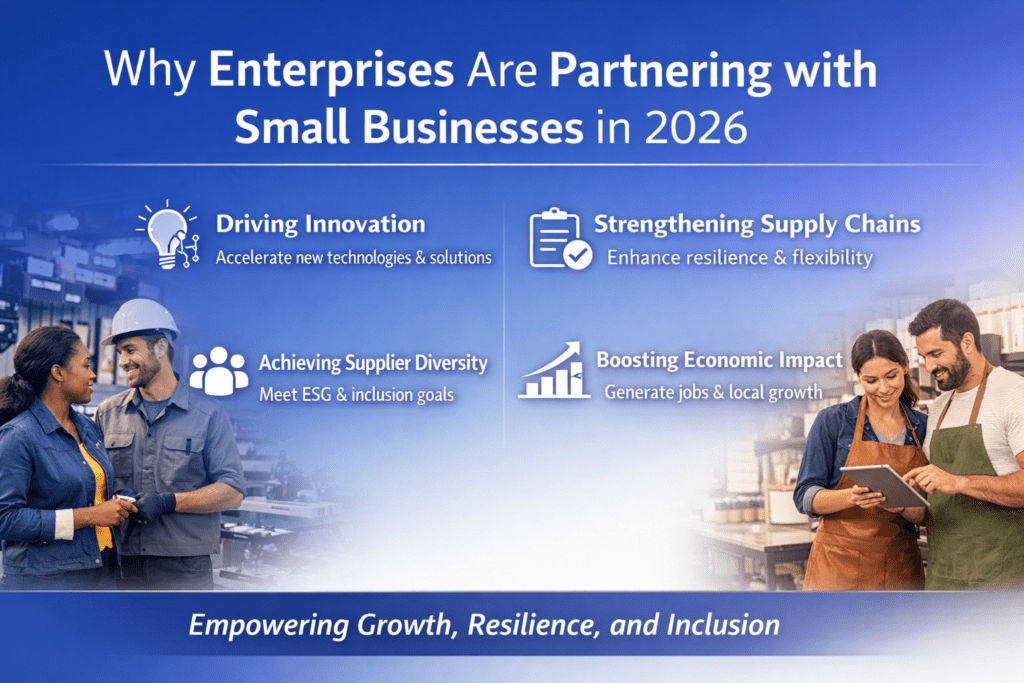
Enterprises in 2026 are increasingly partnering with small businesses to drive innovation, enhance resilience, and meet strategic supplier diversity goals. These collaborations help organizations expand markets, strengthen supply chains, and improve brand reputation while supporting economic inclusion and measurable business outcomes.
Quick Facts: Enterprise Interest in Small Business Partnerships
- $122.7 billion was spent by more than 500 organizations with small businesses in 2024, generating an estimated $202.7 billion in economic output and supporting over 828,000 jobs.
- 85% of U.S. companies now have dedicated supplier diversity programs, though only 59% report actual supplier diversity spend.
- 72% of job seekers say a company’s diversity stance affects their employment decisions.
- 61% of companies plan to increase spending with diverse suppliers in the next year.
- Diverse supplier programs can reduce procurement costs by up to 20% due to increased competition.
Why Enterprises Are Prioritizing Small Business Partnerships in 2026
Enterprises are prioritizing small business partnerships as a strategic approach to drive competitive advantage, expand innovation, and achieve supplier diversity objectives.
Stronger Innovation Through Diverse Perspectives
Small businesses often bring niche expertise and a high level of agility to product development and problem-solving. These qualities help large enterprises innovate more rapidly and respond to market shifts more effectively.
AI and technology integration
Smaller firms are quick to adopt emerging technologies, enabling enterprises to experiment with new tools, processes, and solutions without the overhead that comes from traditional vendor engagements.
Case Example
A technology enterprise partnered with a small supplier to co-develop an AI-driven analytics tool, cutting development cycles by 30% and increasing time-to-market speed for new service offerings.
Supplier Diversity Trends and Enterprise Strategy in 2026
Supplier diversity is no longer about compliance only. It now serves as a core element of enterprise strategy, strengthening supply chain reliability and market relevance.
What Is Supplier Diversity
Supplier diversity refers to procuring goods and services from businesses that are owned by historically underrepresented groups, including many small enterprises.
Enterprise Benefits of Supplier Diversity
Stronger brand reputation Small business and diverse supplier engagement signals corporate commitment to social responsibility, improving brand perception among customers, investors, and employees.
Increased business opportunities Diverse suppliers contribute innovative solutions and open access to new market segments that reflect the demographics of customers served.
Supply chain resilience A broader supplier base reduces dependence on a limited number of vendors, making supply chains more resilient in the face of disruptions.
Enterprise Small Supplier Strategy: What It Means
Enterprise small supplier strategy is a focused procurement approach that integrates small businesses into the supplier ecosystem to strengthen competitiveness, innovation, and sustainability.
Key Elements of Small Supplier Strategy
- Targeted outreach to certified diverse and small businesses
- Procurement policy alignment with business goals
- Performance tracking and measurement
- Supplier development and support programs
This strategy goes beyond transactional buying. It embeds small business engagement into procurement decision-making and long-term enterprise planning.
Top Reasons Enterprises Seek Small Business Partnerships
1. Economic Growth and Job Creation
Enterprises are recognizing the economic impact small businesses have on communities. In 2024, organizations collectively spent $122.7 billion with small businesses, generating over $202.7 billion in economic output and supporting more than 828,000 jobs in the U.S. alone.
This demonstrates small firms are not only suppliers but significant economic multipliers that strengthen local economies.
2. Greater Market Relevance
Partnerships with small and diverse suppliers reflect the diversity of consumers and strengthen the relevance of enterprise offerings across global markets. This matches consumer expectations for inclusivity and community engagement.
3. Enhanced Resilience in Supply Chains
Working with a variety of small suppliers reduces supply chain risk and increases adaptability to disruptions. Small businesses often operate with flexible manufacturing and delivery systems that enable faster response during economic fluctuations.
How Supplier Diversity Programs Are Trending in 2026
Supplier diversity programs are expanding as enterprises link them to broader ESG goals and corporate performance indicators.
Leadership Support and ESG Integration
Supplier diversity has evolved from a standalone program to a strategic priority linked with environmental, social, and governance initiatives. Many companies now report diversity spending figures to executive leadership and boards, reinforcing business accountability.
Economic Performance and Supplier Impact
Enterprises with robust supplier diversity programs report measurable business benefits. These include stronger brand loyalty among consumers, reduced procurement costs, and increased talent attraction. For example:
- 68% of consumers are more likely to buy from companies with a diverse supply chain.
- Companies planning to increase spend with diverse suppliers now account for 61%.
Building an Effective Enterprise Small Supplier Strategy
Key steps enterprises are adopting to integrate small businesses into their supplier base in 2026:
1. Supplier Identification and Certification
Enterprises invest in tools and platforms that help identify potential small and diverse suppliers. Certification assists in verifying eligibility and fostering confidence in supplier capabilities.
2. Clear Procurement Goals
Define measurable goals by supplier category and set realistic targets for spending, engagement, and performance outcomes.
3. Alignment with Corporate Vision
Ensure small business sourcing ties into broader business goals including sustainability, digital transformation, and community impact.
4. Supplier Development and Support
Provide training, mentoring, and performance feedback to small suppliers to help them meet enterprise requirements and scale operations.
5. Data Tracking and Analytics
Utilize modern SRM systems to track spend and supplier performance. Accurate data informs strategic decisions and underscores program outcomes.
Example Case Studies: Small Business Impact
Case Study 1
A global manufacturer implemented a small supplier sourcing initiative focused on local fabricators. Over 18 months, they reduced lead times by 25 percent and introduced flexible product configurations, improving customer satisfaction and reducing overseas dependency.
Case Study 2
A technology company increased spend with small and diverse suppliers by 30 percent year-over-year through targeted outreach and certification partnerships. This not only improved ESG reporting but also enhanced stakeholder engagement.
These cases show how strategy and execution combine to enhance business performance and strengthen community relationships.
Key Takeaways
- Enterprises are increasingly partnering with small businesses to boost innovation, supply chain resilience, and diversity spend.
- Supplier diversity is a strategic priority, closely linked to corporate performance and ESG.
- Modern procurement strategies include targeted outreach, certification, and performance tracking.
- Measurable statistics show growing enterprise engagement with small suppliers and diverse business spend.
- Case studies demonstrate tangible gains in lead time, customer satisfaction, and stakeholder engagement.
Conclusion
In 2026, small business partnerships are no longer optional for enterprises looking to stay competitive and socially responsible. These relationships deliver strategic advantages from stronger innovation pipelines to expanded market relevance, economic impact, and improved operational resilience. For organizations seeking to strengthen supplier diversity efforts or develop a small business sourcing strategy that aligns with corporate goals, now is the time to act.
Contact STARS to discover how to enhance your supplier diversity program, integrate small supplier strategies, and unlock new opportunities for growth and innovation.

Marketing professional passionate about people, creativity, and meaningful growth. Proud to be part of the STARS team, empowering businesses to discover and manage diverse suppliers through one powerful platform.