How AI Is Transforming Supplier Diversity Programs in 2026
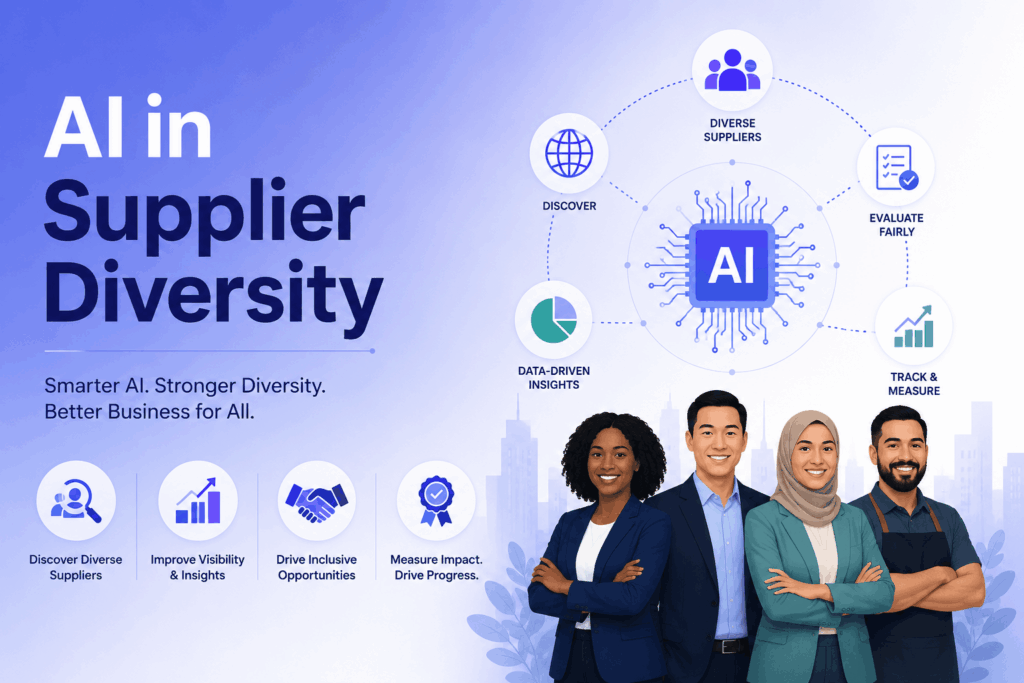
AI in supplier diversity refers to the use of artificial intelligence technologies to automate supplier identification, streamline certification verification, reduce bias in procurement decisions, and improve spend tracking across diverse supplier categories. AI-powered supplier diversity platforms like STARS use AI, automation, and low-code frameworks to help organizations move from manual, compliance-driven programs to data-driven, strategic procurement ecosystems that deliver measurable business outcomes.
Key Takeaways: AI-Powered Supplier Diversity at a Glance
- AI-powered supplier diversity platforms can reduce supplier onboarding time by up to 60%, enabling procurement teams to identify and certify diverse suppliers faster than traditional manual processes.
- Organizations using AI procurement solutions report 20% to 30% improvements in diverse spend tracking accuracy compared to spreadsheet-based methods.
- The global AI in procurement market is projected to reach $14.4 billion by 2029, with supplier diversity automation representing a fast-growing segment.
- Platforms like STARS now integrate AI-driven search capabilities across 100+ trusted certification sources, including SAM.gov, SBA, CPUC, and VeTCERT, to match buyers with qualified diverse suppliers automatically.
- Federal and state supplier diversity mandates are accelerating adoption of AI-powered procurement solutions, particularly among government contractors and Fortune 500 companies.
- STARS currently manages over $10 billion in analyzed spend across 10,000+ suppliers for 100+ Fortune 500 clients, demonstrating the scale AI-powered platforms can achieve.
Why AI-Powered Supplier Diversity Is Gaining Momentum in 2026
AI-powered supplier diversity is gaining momentum because traditional manual approaches to managing diverse supplier pipelines are too slow, error-prone, and resource-intensive for modern procurement teams. AI solves these challenges by automating supplier discovery, certification tracking, and spend analysis, allowing organizations to scale their programs without proportional increases in headcount.
What Is Driving the Shift Toward AI in Supplier Diversity?
Three forces are converging to accelerate adoption. First, regulatory requirements are expanding. The U.S. Small Business Administration (SBA) continues to strengthen federal contracting goals for small disadvantaged businesses, with a target of 15% of federal contract dollars in fiscal year 2025. Second, corporate ESG (Environmental, Social, and Governance) commitments now require auditable data on diverse spend. Third, procurement teams face growing pressure to do more with fewer resources, making automation essential.
As VIVA, the company behind the STARS platform, has demonstrated through 25+ years of serving Fortune 500 clients and government entities, Supplier Diversity Managers face persistent challenges: finding new diverse suppliers, capturing spend data from prime suppliers, ensuring compliance, running robust reports, and keeping diversity information up to date. AI directly addresses each of these bottlenecks.
According to Deloitte (2024), 79% of CPOs (Chief Procurement Officers) plan to increase investment in AI-powered procurement tools over the next two years, citing supplier diversity tracking as a top use case.
According to Technavio (2025), the global AI in procurement market was valued at USD 5.87 billion, at a CAGR of 27.9% from 2024 to 2029.
How Does AI Compare to Traditional Supplier Diversity Management?
The difference between traditional supplier diversity management and AI-powered supplier diversity is that traditional methods rely on manual data entry, static databases, and periodic audits, while AI systems use machine learning, natural language processing, and real-time data integration to continuously identify, verify, and monitor diverse suppliers.
| Feature | Traditional Approach | AI-Powered Approach (e.g., STARS) |
|---|---|---|
| Supplier Discovery | Manual searches, trade shows, referrals | AI-powered search across 100+ databases including SAM, SBA, CPUC, and VeTCERT |
| Certification Verification | Quarterly manual checks | Real-time verification with 100% accuracy on government certifications |
| Spend Tracking | Spreadsheet-based, error-prone | Automated classification handling 50,000 to 1M+ spend records |
| Data Enrichment | Manual research and phone calls | AI-powered data cleaning with 90%+ accuracy (Gold tier) and 98%+ (Platinum tier) |
| Reporting | Static quarterly reports | Unlimited self-service report builder with dynamic dashboards |
| Scalability | Limited by headcount | Enterprise-scale with 10,000+ suppliers managed per client |
Top Ways AI Is Transforming Supplier Diversity Programs
Here are the top five ways AI is transforming supplier diversity programs: automated supplier discovery, intelligent data enrichment, predictive spend analytics, bias reduction in sourcing, and enhanced compliance reporting. Each capability addresses a specific bottleneck in traditional diversity procurement workflows.
How Does AI Automate Diverse Supplier Discovery?
AI automates diverse supplier discovery by using intelligent search algorithms to scan public databases, certification registries, and procurement marketplaces simultaneously. The STARS External Supplier Locator, for example, provides access to 1M+ certified suppliers through an integrated database covering 100+ trusted sources, including SAM.gov, SBA, CPUC, VeTCERT, and STARS’ internal records.
Key capabilities of AI-powered supplier discovery platforms include:
- AI-powered search that discovers suppliers by NAICS codes, certifications, diversity categories, and geography
- Open web integration with Google for Small and Diverse Businesses to expand sourcing reach
- Direct engagement tools including email outreach, favorite lists, and targeted campaign management
- Global expansion support with optional add-ons for Canada and international supplier sourcing
These tools match buyer requirements with supplier capabilities in seconds, a process that previously took procurement analysts weeks of manual research.
According to Dun & Bradstreet (2024), organizations using AI-assisted supplier discovery tools expanded their qualified diverse supplier pipeline by an average of 35% within the first year of deployment.
How Does AI Improve Data Accuracy in Supplier Diversity Programs?
AI improves data accuracy in supplier diversity programs by automating data cleansing, enrichment, and periodic refresh cycles that keep supplier records current. Manual data management typically results in outdated certifications, duplicate records, and incomplete supplier profiles, all of which undermine program integrity.
The STARS platform uses AI-powered and manual data cleaning processes that achieve trusted accuracy levels: 90%+ accuracy for Gold tier enrichment, 98%+ accuracy for Platinum tier, and 100% accuracy on government certifications. The system also supports volume-based discounts for large data sets and international data enrichment for global programs.
According to Forbes (2024), companies that implemented AI-driven spend analytics achieved a 25% increase in diverse supplier utilization within 18 months, compared to a 7% average increase among companies using manual tracking.
What Role Does Predictive Analytics Play in Diverse Spend Optimization?
Predictive analytics in supplier diversity uses historical spend data, market trends, and supplier performance records to forecast which diverse suppliers are best positioned for upcoming contracts. AI platforms analyze past purchasing patterns and flag opportunities where diverse suppliers are underrepresented, shifting diversity programs from reactive compliance to proactive strategy.
Modern platforms like STARS provide Tier 1 Spend Analytics and Tier 2 Spend Reporting modules that offer:
- Centralized data hubs managing scrubbed spend files across 10 industry-standard views (Cost Center, General Ledger, Commodities, and more)
- High-volume data handling supporting 50,000 to 1M+ spend records at enterprise scale
- Unlimited self-service report builders with built-in visualizations, charts, and dashboards
- Federal ISR (Individual Subcontract Report) tracking with configurable goals and year-over-year change analysis
- Economic Impact Reports covering 20 diversity categories with state-level job creation heat maps
Real-World Example: AI-Powered Supplier Diversity in Action
STARS by VIVA USA provides a compelling case study in AI-powered supplier diversity at scale. Serving 100+ Fortune 500 and government clients with over $10 billion in analyzed spend and 10,000+ managed suppliers, the platform demonstrates what comprehensive AI-powered supplier diversity looks like in practice.
One enterprise client, Workday, described STARS as a “valued extension” of their Supplier Diversity team. Disney, after initial evaluation, expanded its engagement to include the full suite of supplier diversity solutions, including economic impact reports. Eastern Bank highlighted how STARS delivered a comprehensive vendor registration and minority vendor search solution that exceeded their expectations.
STARS achieves these outcomes through a combination of AI-driven capabilities:
- AI-Powered Supplier Locator scanning 100+ certification databases with intelligent search
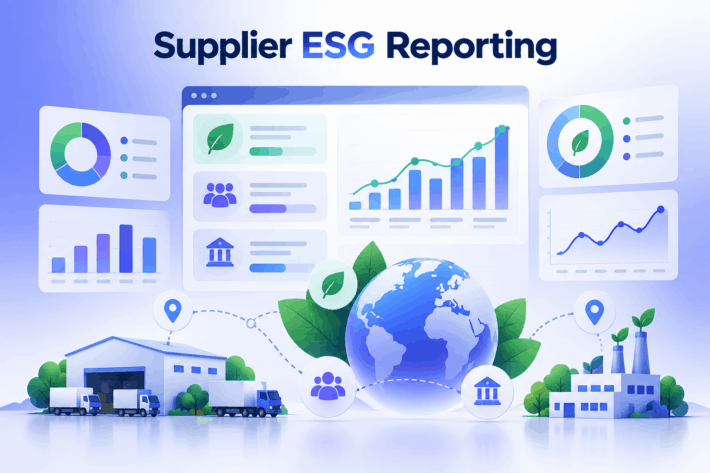
- Automated ESG and Supplier Risk Reporting tracking up to 200 customizable data points
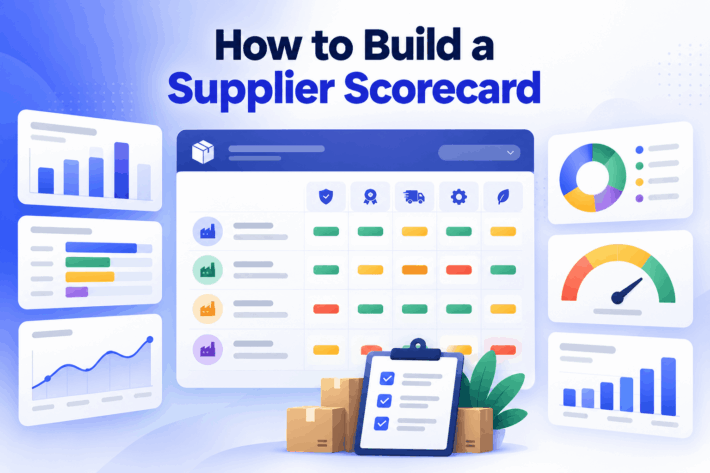
- Supplier Scorecarding with up to 200 customizable KPIs across performance, diversity, ESG, and compliance
- Contract Compliance Management automating the full contract lifecycle from initiation through renewal
- Concierge Services providing hands-on sourcing support with 90%+ contact enrichment rates
According to the Hackett Group (2024), best-in-class procurement organizations using AI for supplier diversity management spend 45% less on program administration while achieving 2x the diverse spend growth of peer organizations.
Challenges and Considerations for AI in Supplier Diversity
AI in supplier diversity programs faces challenges including data quality issues, algorithmic bias risks, integration complexity with legacy procurement systems, and resistance to change from procurement teams accustomed to manual workflows. Organizations must address these barriers proactively to realize the full value of AI-powered procurement solutions.
How Can Organizations Overcome Data Quality Barriers?
Data quality is the foundation of effective AI in supplier diversity. Organizations should start by conducting a data audit of existing supplier records, standardizing classification codes, and integrating data from multiple certification bodies. Platforms like STARS address this through automated data scrubbing workflows that include initial analysis, auto-scrub processing, verification of doubtful records, and final quality assurance, typically completing the process within two to three weeks.
Integration with existing ERP systems is equally critical. STARS integrates with Ariba, Coupa, Oracle/PeopleSoft, SAP, SharePoint, and other third-party ERP/BI/CRM systems through both file-based and API-based methods, ensuring supplier diversity data flows seamlessly into existing procurement infrastructure.
What Ethical Safeguards Are Needed for AI Procurement Tools?
Ethical safeguards for AI procurement tools include regular algorithmic audits, transparent scoring criteria, human oversight of automated decisions, and compliance with the NIST AI Risk Management Framework. Organizations should establish a governance committee that includes procurement, legal, diversity and inclusion, and IT stakeholders to oversee AI deployment in supplier diversity programs.
Conclusion: The Future of AI-Powered Supplier Diversity Programs
AI is transforming supplier diversity programs by automating supplier discovery across 100+ certification databases, delivering enterprise-scale spend analytics handling 1M+ records, and providing predictive insights that drive strategic procurement decisions. Organizations that adopt AI-powered procurement solutions are achieving measurable improvements in diverse spend, compliance accuracy, and program efficiency. As AI procurement trends in 2026 accelerate, companies that invest in these technologies today will build more resilient, equitable supply chains.
Ready to transform your supplier diversity program? Contact STARS to learn how AI-powered supplier diversity solutions can help your organization achieve its diversity goals, improve compliance, and drive measurable procurement outcomes.
Help Center
Frequently asked questions

Marketing professional passionate about people, creativity, and meaningful growth. Proud to be part of the STARS team, empowering businesses to discover and manage diverse suppliers through one powerful platform.