
How to Build a Small Business Sourcing Program That Strengthens Supplier Diversity
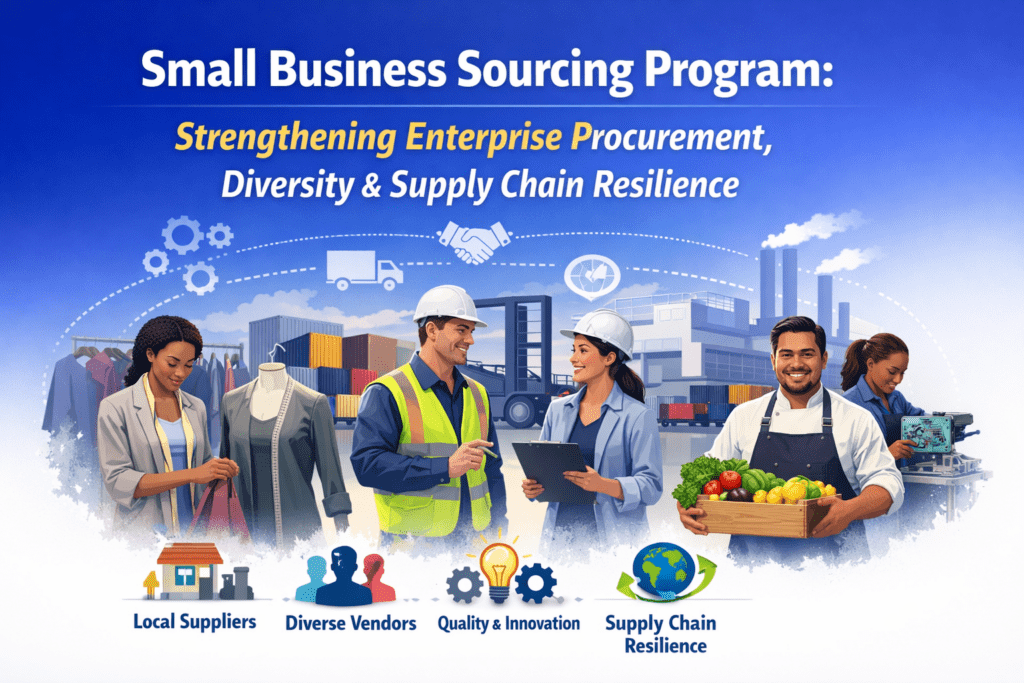
A small supplier sourcing program is a structured initiative that helps organizations strategically include small businesses in their procurement processes. This approach boosts innovation, strengthens supply chain resilience, and creates economic inclusion while advancing enterprise supplier sourcing goals. Small business procurement is essential for a competitive, diverse, and sustainable enterprise supply chain.
Why Small Supplier Sourcing Matters?
Small supplier sourcing programs empower small and underrepresented businesses to compete for contracts with larger enterprises. These initiatives are at the heart of supplier diversity, helping procurement teams build resilient supply chains and create positive economic impact. Small businesses deliver unique products, local expertise, and innovation that traditional suppliers may not offer. Organizations that intentionally include small suppliers are better positioned to manage risk, cost fluctuations, and evolving market demands.
Quick Facts and Key Statistics
- According to Procurementmag, businesses spent US$168 billion on small and diverse suppliers, generating a broader economic impact of US$303 billion and supporting more than 710,000 jobs.
- A 2025 enterprise survey found that 96% of executives want to source more from small businesses to improve resilience and competitive advantage.
- In the 2024 State of Supplier Diversity report, 92% of organizations monitor their spend with small and diverse suppliers, reflecting growing integration into enterprise strategies.
What Is a Small Supplier Sourcing Program?
A small supplier sourcing program is a set of policies and processes that guide procurement teams in identifying, evaluating, and integrating small businesses into their sourcing strategies. These programs emphasize fair access, competitive evaluation, and strategic inclusion, often aligned with broader supplier diversity goals.
How It Differs from Traditional Procurement
| Aspect | Traditional Procurement | Small Supplier Sourcing Program |
|---|---|---|
| Supplier Base | Focuses on established, large vendors | Includes small, diverse, and local vendors |
| Strategic Goals | Cost and scale focused | Inclusion, resilience, innovation |
| Evaluation Criteria | Price and volume | Value, diversity, local impact |
| Long-Term Impact | Operational stability | Economic growth and competitive edge |
The Role of Small Business Procurement in Enterprise Supplier Sourcing
Enhancing Supplier Diversity
Small business procurement is a core driver of supplier diversity. It ensures that underrepresented businesses have meaningful opportunities to participate in corporate supply chains. Supplier diversity not only reflects a broader range of perspectives but also strengthens community relationships and enhances corporate reputation.
Driving Innovation and Competitive Advantage
Small suppliers often specialize in niche products, customized solutions, and agile delivery models. Their contributions help larger enterprises innovate in ways that vertically integrated supply chains cannot easily match. Including these suppliers increases competitive differentiation.
Risk Mitigation and Resilience
Enterprises that source more from small suppliers spread their risk across a wider supplier base, reducing dependency on a few major vendors. Especially during global disruptions, this diversity of suppliers can improve responsiveness and flexibility.
Step-by-Step Guide to Building a Small Supplier Sourcing Program
1. Define Clear Program Goals
Start by identifying what the program should achieve. Typical objectives include:
- Increase small business procurement spend to a set percentage of total sourcing
- Strengthen enterprise supplier sourcing diversity
- Improve local economic impact and job creation
- Enhance supply chain resilience and innovation
2. Gain Executive Sponsorship
Executive buy-in ensures the program gets necessary resources and visibility. Leaders should articulate how the small supplier program supports broader business goals, including revenue growth, risk management, and brand credibility.
3. EstablishPolicy and Governance
Develop formal policies that outline eligibility criteria, evaluation standards, and compliance expectations for small suppliers. Include definitions of supplier sizes and diversity types. Provide guidelines on how procurement teams should interact with this segment.
4. Supplier Identification and Outreach
Use diverse sourcing channels to find small suppliers. Strategies include:
- Partnering with certified small business directories
- Attending industry trade shows
- Hosting supplier open houses
- Working with local chambers of commerce and business associations
This outreach builds a robust pool of potential partners that reflect your diversity and capability goals.
5. Vetting and Onboarding Small Suppliers
Develop a streamlined vetting process that balances due diligence with accessibility. Include:
- Financial stability checks
- Capacity assessment
- Quality verification
- Compliance with regulations
Create transparent onboarding procedures that help small suppliers understand expectations and processes.
6. Integrate with Procurement Systems
Ensure your procurement technology and data systems track small supplier spend, performance, and compliance. Use analytics to monitor progress and identify gaps in sourcing patterns.
7. Measure Performance and Optimize
Track key performance indicators such as:
- Percentage of procurement spend with small suppliers
- Supplier retention and performance ratings
- Innovation contributions and time to market
- Economic impact on local communities
Regular reporting helps reinforce accountability across departments.
Common Challenges and Practical Solutions
Challenge: Lack of Awareness or Data
Solution: Build internal data systems that categorize suppliers by size and diversity. Educate procurement teams on program goals, benefits, and best practices.
Challenge: Difficulty Finding Qualified Small Suppliers
Solution: Partner with local business networks, industry associations, and online platforms to widen supplier discovery. Encourage small businesses to obtain relevant certifications.
Challenge: Internal Resistance
Solution: Align the program with corporate goals and customer expectations. Present case studies that demonstrate how small suppliers have driven value.
Case Studies: Strategic Small Supplier Sourcing
Example 1: Enterprise Innovates Through Local Sourcing
A large manufacturer implemented a small supplier sourcing program focused on local fabricators. Within 18 months, they reduced lead times by 25 percent and introduced more flexible product configurations. The manufacturer reported improved customer satisfaction and reduced dependency on overseas suppliers.
Example 2: Technology Company Diversifies Supplier Base
A global tech firm committed to increasing small and diverse supplier spend. By leveraging targeted outreach and certification partnerships, they increased small business procurement by 30 percent year over year. In addition to growth in diverse suppliers, the program contributed to stronger ESG reporting and stakeholder engagement.
Key Takeaways
- A small supplier sourcing program integrates small businesses into enterprise procurement to drive innovation, resilience, and economic growth.
- Small business procurement enhances supplier diversity, helping enterprises better reflect community needs and improve brand reputation.
- Executives increasingly recognize the strategic value of sourcing from small suppliers, with 96 percent of procurement leaders wanting to source more from small businesses.
- Tracking and measuring spend and performance is essential to sustain and scale the program.
Conclusion
Building a small supplier sourcing program is not just an ethical choice. It is a strategic imperative that strengthens procurement, enhances enterprise supplier sourcing, and drives lasting economic impact. Organizations that integrate small suppliers into their sourcing strategy are better positioned to innovate, manage risk, and cultivate long-term resilience. For support in developing your supplier diversity and small business procurement initiatives, contact STARS for expert guidance and tailored solutions.

Marketing professional passionate about people, creativity, and meaningful growth. Proud to be part of the STARS team, empowering businesses to discover and manage diverse suppliers through one powerful platform.