Supplier Verification Process: How to Verify Supplier Legitimacy and Prevent Vendor Fraud (A Practical Checklist)
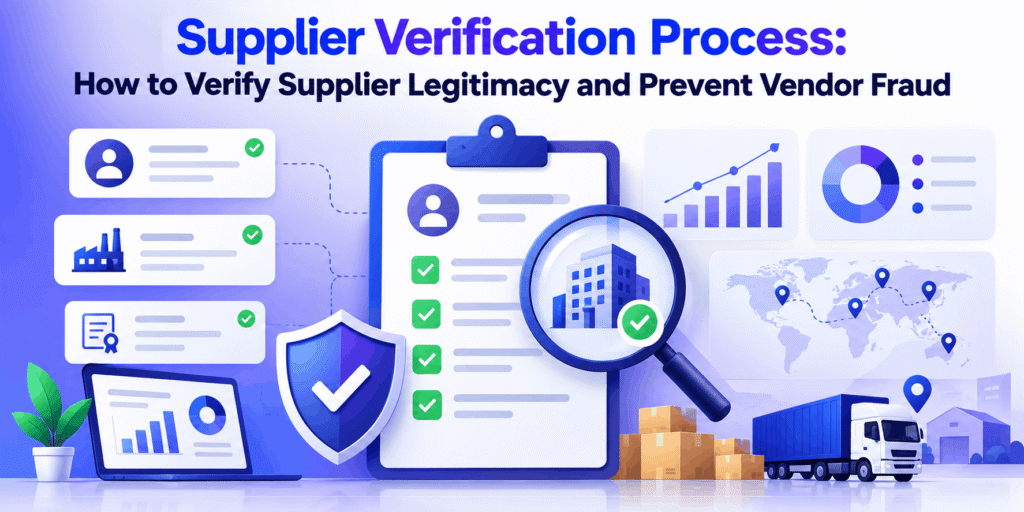
A supplier verification process is defined as the structured set of checks a buyer uses to confirm that a supplier is a real, legally registered, financially stable business that is exactly who it claims to be. It validates identity, tax ID, bank details, sanctions status, and certifications before onboarding, then monitors suppliers for changes after the first payment.
Key Takeaways: Supplier Verification Process Quick Facts
A strong supplier verification process confirms identity, ownership, banking, compliance, and certification data before a vendor is paid, and it keeps checking after onboarding. The facts below summarize why procurement and accounts payable (AP) teams in 2026 treat vendor verification as a core fraud control.
- A supplier verification process confirms a vendor’s legal identity, tax ID, bank account, sanctions status, and certifications before the first payment.
- The FBI’s Internet Crime Complaint Center recorded about $2.77 billion in business email compromise (BEC) losses in 2024.
- Ivalua’s 2026 survey found that 40% of organizations experienced invoice fraud in the previous 12 months.
- Bank detail changes should always be confirmed by a call-back to a phone number already on file, never one listed in the change request.
- Supplier validation is continuous: certifications expire, ownership changes, and shipment data drifts over time.
- Platforms like STARS Supplier Success combine supplier registration, data scrubbing, and certification tracking in one workflow.
What Is a Supplier Verification Process and Why Does It Matter?
A supplier verification process matters because most vendor fraud succeeds at two weak points: onboarding a fake or misrepresented supplier, and changing a real supplier’s payment details without confirmation. Verifying identity, banking, and compliance data before payment closes both gaps and protects cash, audit readiness, and supplier diversity reporting accuracy.
Vendor fraud includes ghost vendors, fake invoices, impersonated supplier emails, and suppliers that misstate ownership or certifications. Each scheme exploits incomplete or unchecked supplier master data.
How Big Is the Vendor Fraud Problem in 2026?
The numbers show that vendor fraud is common, expensive, and slow to detect:
- According to the Association for Financial Professionals (2026), 76% of organizations reported attempted or actual payments fraud in 2025, a slight decline from 2024.
- According to the FBI Internet Crime Complaint Center (2025), business email compromise caused $2,770,151,146 in reported losses across 21,442 complaints in 2024.
- According to Ivalua (2026), 40% of organizations experienced invoice fraud in the past 12 months, and those that lost money averaged $367,000 in losses.
- According to Ivalua (2026), only 25% of organizations verify suppliers with mostly automated checks, a standardized workflow, and an audit trail.
- According to Creditsafe (2024), fake identities and bad actors accounted for 47% of vendor fraud cases reported by U.S. businesses in 2024.
- According to Deloitte (2025), 61% of chief procurement officers rank enhanced supplier information sharing and collaboration among their most effective risk-mitigation strategies.
The Supplier Verification Process Checklist: 10 Steps to Prevent Vendor Fraud
Here are the top 10 ways to verify supplier legitimacy. The checklist moves from identity to money to compliance, so each step builds on verified data from the step before. Procurement, AP, and compliance teams should complete steps 1 through 8 before onboarding and repeat steps 9 and 10 on a fixed schedule.
- Collect data through one registration channel. Route every new vendor through a single portal, such as the STARS Supplier Registration Portal, instead of email or spreadsheets.
- Confirm legal registration. Match the legal name and address against the Secretary of State business registry and SAM.gov for federal contractors.
- Validate the tax ID. Use the IRS TIN Matching program to confirm the name and TIN combination on the W-9.
- Screen sanctions and watchlists. Check the vendor and its owners against the OFAC Sanctions List Search.
- Verify bank account ownership. Require a bank letter or voided check, and confirm the account holder name matches the legal entity.
- Check the digital footprint. Confirm the website domain age, business email domain, and physical address. A PO Box alone is a red flag.
- Validate certifications. Confirm diversity and quality certificates with the issuing body, such as WBENC, NMSDC, or the SBA, and record expiration dates.
- Assess financial health. Review credit reports and references for high-value or single-source suppliers.
- Lock down change requests. Confirm any bank or contact change by calling a number already on file.
- Monitor continuously. Re-screen sanctions, certifications, and performance data at least quarterly.
For a deeper framework, read the STARS guide to building a supplier vetting process and its checklist on what to check before finalizing a supplier.
How Do I Ensure My Suppliers Are Who They Claim to Be?
To ensure suppliers are who they claim to be, match three independent sources: government records (Secretary of State, SAM.gov, IRS TIN Matching), financial records (bank letter or credit report), and direct contact through a verified phone number. If any of the three disagree, pause onboarding until the discrepancy is resolved.
What Are the Best Practices for Validating Supplier-Submitted Data?
Supplier-submitted data should never be trusted on its own. The best practices for validating supplier-submitted data are:
- Require supporting documents for every critical field, including W-9s, bank letters, and certificates.
- Use dropdowns and format rules in registration forms to block typos and inconsistent entries.
- Compare submitted data against open-web and government sources automatically.
- Flag duplicate tax IDs, bank accounts, or addresses shared with employees or other vendors.
- Keep an audit trail of who approved each field and when.
Supplier Validation vs. Supplier Verification Process: What Is the Difference?
The difference between supplier validation and a supplier verification process is timing and scope. Verification confirms that a supplier is real and legitimate at onboarding. Supplier validation confirms that the supplier’s data, certifications, and performance stay accurate and consistent over the entire relationship, including invoices and shipments.
| Factor | Supplier Verification | Supplier Validation |
|---|---|---|
| Core question | Is this supplier real and legitimate? | Is this supplier’s data still accurate? |
| Timing | Before onboarding and first payment | Ongoing, after onboarding |
| Typical checks | Legal entity, TIN, bank, sanctions | Certifications, renewals, shipment and invoice consistency |
| Owner | Procurement and compliance | Procurement, AP, and supplier diversity teams |
| Main risk addressed | Fake or ghost vendors | Data drift, expired certifications, invoice fraud |
Ongoing Vendor Verification Process: Validating Supplier Consistency Across Shipments
An ongoing vendor verification process validates supplier consistency across shipments by matching each purchase order, receiving record, and invoice (three-way match), then comparing quantities, prices, ship-from addresses, and remit-to details against the approved supplier profile. Any deviation from the verified baseline triggers a review before payment is released.
Consistency checks matter because fraud often starts after a legitimate supplier is approved. A compromised supplier email account can redirect payments, and a reseller can quietly substitute an uncertified subcontractor.
Which Red Flags Signal Vendor Fraud After Onboarding?
Watch for these warning signs in supplier records and shipments:
- Urgent requests to change bank details or remit-to addresses.
- Invoices just below approval thresholds or with sequential invoice numbers.
- Ship-from locations that differ from the registered address.
- Duplicate invoices with small changes to amounts or dates.
- Certifications that expire without renewal documents.
Clean data makes these flags visible. STARS explains how in how data scrubbing improves supplier risk management.
How STARS Automates the Vendor Verification Process
STARS Supplier Success automates the vendor verification process by combining supplier registration, data scrubbing and enrichment, and certification tracking in one platform. Suppliers submit data through a branded portal, STARS validates contacts, certifications, and spend data with AI plus manual review, and automated alerts flag expiring certifications before they create compliance gaps.
Key STARS capabilities include:
- Data Scrubbing and Enrichment: De-duplication, open-web validation, certification verification, and integrations with SAP, Oracle, and Coupa.
- Certification Applications: Document uploads, approval workflows, and renewal reminders.
- AI-assisted discovery: STARS covers this in AI supplier discovery and verification.
STARS also details onboarding controls in reducing risk through smart supplier onboarding.
Case Study: How Did a Midwest Insurer Reach 99% Supplier Data Accuracy?
A leading Midwest insurance company had a supplier master file with duplicates, outdated records, and missing certifications. STARS processed 4,689 records, removed 160 duplicates and 17 invalid entries, and cross-referenced suppliers against SAM.gov, the SBA, WBENC, and NMSDC.
The result was a verified baseline of 4,512 records at 99% data accuracy. Reporting that once took weeks of manual work became a repeatable, automated process.
Conclusion: Build a Supplier Verification Process That Stops Fraud Early
A reliable supplier verification process comes down to three points. First, verify identity, tax ID, banking, and sanctions data before any first payment. Second, keep validating certifications, invoices, and shipment consistency after onboarding. Third, automate the checks with clean, centralized supplier data so red flags surface quickly. Teams that follow this checklist reduce fraud losses and produce supplier diversity reports they can defend.
Ready to strengthen your vendor verification process? Contact STARS today for help with supplier registration, data validation, and all of your supplier diversity needs.
Help Center
FAQs About the Supplier Verification Process
A vendor verification process has six core steps: collect data through one registration portal, confirm legal registration, validate the tax ID with IRS TIN Matching, screen OFAC sanctions lists, verify bank account ownership, and validate certifications. Mature teams add financial health checks and quarterly re-screening after onboarding.
Match three independent sources before onboarding: government records such as SAM.gov and Secretary of State filings, financial records such as a bank letter, and direct contact through a verified phone number. When any source conflicts with the supplier's submission, pause onboarding and request supporting documents before approving the vendor.
Supplier validation is defined as the ongoing confirmation that a supplier's data, certifications, pricing, and performance remain accurate after onboarding. It includes certification renewal tracking, three-way invoice matching, and periodic re-screening. Supplier validation complements the one-time supplier verification process completed before the first purchase order.
The best practices for validating supplier-submitted data are requiring documents for critical fields, using structured registration forms, cross-checking data against government and open-web sources, flagging duplicate tax IDs or bank accounts, and keeping an audit trail of approvals. Tools like STARS Data Scrubbing automate most of these checks.
Validate supplier consistency across shipments by running a three-way match of purchase order, receiving record, and invoice for every delivery. Compare quantities, unit prices, ship-from addresses, and remit-to details against the approved supplier profile. Investigate any deviation before releasing payment, especially changes in bank details.
Repeat sanctions screening and certification checks at least quarterly, and perform a full supplier verification process annually or whenever ownership, bank details, or legal names change. High-risk categories, such as single-source suppliers, international vendors, and payments above $100,000, deserve monthly monitoring by procurement and compliance teams.
Business email compromise and vendor impersonation are among the most common types of vendor fraud. The FBI's IC3 recorded about $2.77 billion in BEC losses in 2024. Fraudsters impersonate real suppliers and request bank detail changes, so call-back verification is the most effective single control.
Detect ghost vendors by flagging suppliers with PO Box-only addresses, no web presence, recently registered domains, or bank accounts and tax IDs that match employees or other vendors. Run duplicate checks on the vendor master file quarterly and require dual approval for any new vendor creation in the ERP.
Free U.S. tools for supplier verification include SAM.gov for federal entity registrations, the IRS TIN Matching program for tax IDs, the OFAC Sanctions List Search for sanctions screening, state Secretary of State business registries, and the SBA Small Business Search for certified small businesses.
STARS Supplier Success helps by combining a supplier registration portal, AI-assisted data scrubbing and enrichment, and certification application tracking. It validates contacts, certifications, and spend data, removes duplicates, and sends renewal alerts, giving procurement and supplier diversity teams verified data for audits, Tier 2 reporting, and inclusive sourcing.

Marketing professional passionate about people, creativity, and meaningful growth. Proud to be part of the STARS team, empowering businesses to discover and manage diverse suppliers through one powerful platform.