

What Is the Difference Between Updating Data Manually vs Using Automated Enrichment Tools?
How Accurate Data Drives Supplier Diversity Success
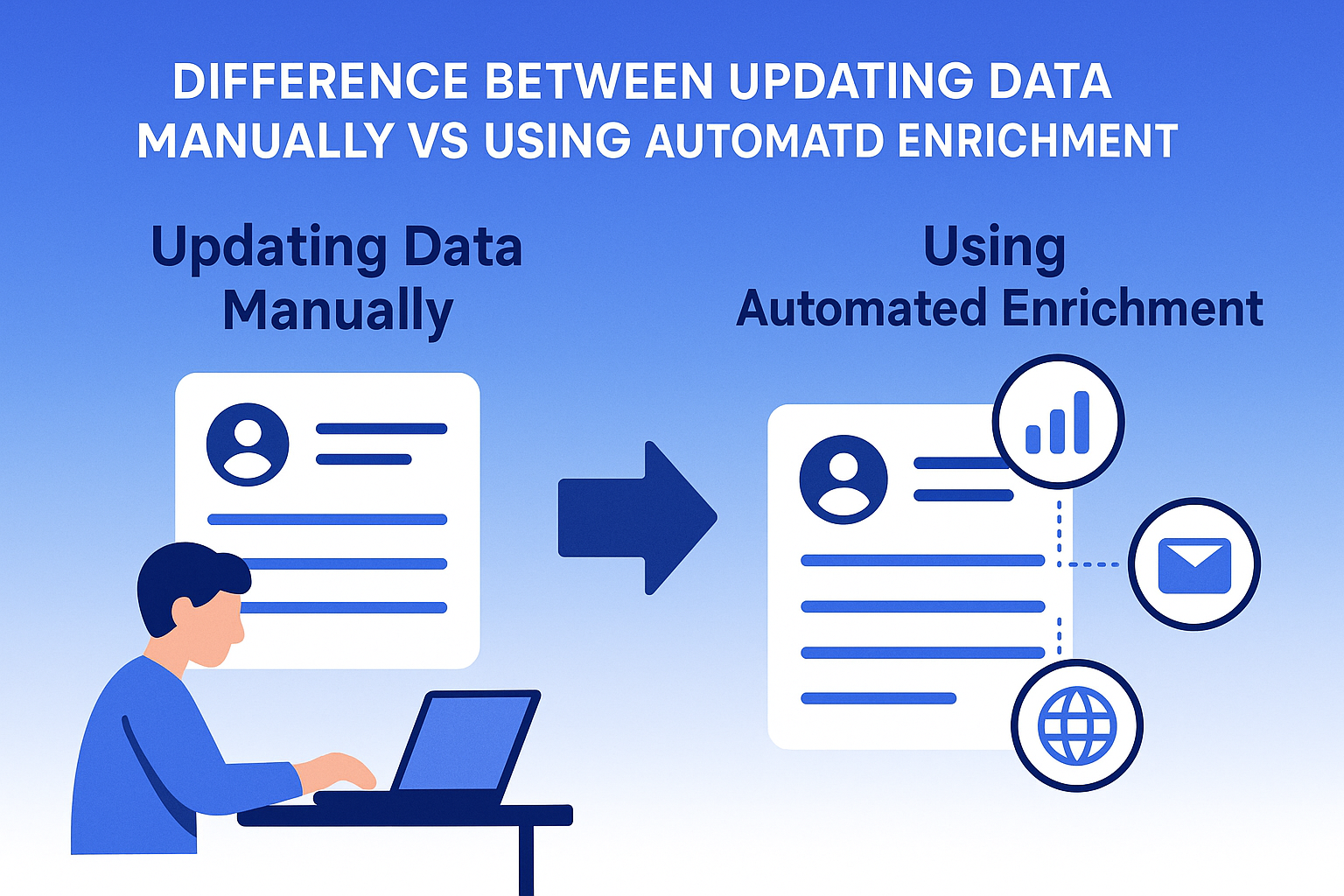
The key difference between updating data manually and using automated enrichment tools lies in efficiency and accuracy. Manual updates rely on human input to correct or add supplier details, while automated enrichment tools use AI and external databases to continuously update and verify supplier information at scale. For supplier diversity programs, automation ensures better visibility, compliance, and inclusion across diverse supplier networks.
Why Data Enrichment Matters in Supplier Diversity
Supplier diversity leaders depend on accurate data to identify, evaluate, and report on diverse suppliers. Data enrichment is the process of enhancing existing supplier records with additional attributes such as certifications, ownership type, geography, industry codes, and performance data. Data scrubbing, in contrast, removes duplicates and cleans inconsistencies to maintain quality and compliance.
Without these processes, organizations risk inaccurate Tier 2 reporting, missed ESG targets, and the exclusion of qualified diverse suppliers from sourcing opportunities.
Manual Data Updates vs Automated Enrichment Tools
Manual Data Updates Defined
Manual updates involve individuals reviewing supplier data, confirming certification statuses, and manually entering information into databases or CRMs. This approach depends heavily on human judgment, which is useful for nuanced supplier verification or when onboarding new diverse vendors.
Automated Enrichment Tools Defined
Automated enrichment tools use APIs, artificial intelligence, and external databases to update and verify supplier information automatically. They can append new data fields such as certification expiry dates, supplier performance metrics, and ESG attributes without manual intervention.
Key Differences Manual Updates & Automated Enrichment
| Category | Manual Updates | Automated Enrichment Tools |
|---|---|---|
| Speed | Slow and dependent on staff bandwidth | Updates occur in real time or on schedule |
| Accuracy | Prone to human error | Uses verified data sources and AI validation |
| Scalability | Limited to available personnel | Easily scales across thousands of suppliers |
| Cost | Labor-intensive and time-consuming | One-time setup and predictable ongoing costs |
| Compliance | Higher risk of missed certifications | Automatically flags expired or missing data |
| Visibility | Fragmented across systems | Centralized supplier insights and dashboards |
The Risks of Relying on Manual Data Updates
In supplier diversity, manual updates often lead to overlooked opportunities and compliance risks.
1. Missed Diverse Supplier Recognition
When certifications expire or records go unchecked, diverse suppliers may not appear in Tier 1 or Tier 2 reports. This not only undermines corporate inclusion goals but can also affect public perception and government reporting accuracy.
2. Inconsistent Data Across Systems
Manual processes often result in mismatched records between ERP, CRM, and supplier portals. A supplier may appear as certified in one system and uncertified in another, leading to reporting errors and reduced trust from stakeholders.
3. Reduced Agility and Response Time
Procurement teams relying on manual updates struggle to respond to supplier disruptions or new RFPs. A single update cycle might take weeks, delaying sourcing decisions.
4. Higher Costs and Labor Dependency
Manual data management consumes resources that could otherwise drive strategic initiatives like mentorship programs, supplier development, or ESG innovation.
The Benefits of Automated Enrichment Tools for Supplier Diversity
1. Real-Time Supplier Verification
Automated tools connect directly with certification databases (such as NMSDC, WBENC, or SBA) to validate diverse supplier status in real time. This ensures up-to-date and auditable reporting.
2. Enhanced Visibility into Tier 2 Networks
Automated enrichment enables organizations to trace spend beyond Tier 1 suppliers. By enriching vendor data with sub-supplier and certification information, companies gain accurate insight into their broader diverse supplier ecosystem.
3. Continuous Data Quality Improvement
Automated tools continuously scan for duplicates, outdated records, or incomplete profiles. This improves data hygiene and reduces manual cleanup.
4. Scalable ESG and Compliance Reporting
Procurement leaders can meet ESG and supplier diversity reporting requirements efficiently. Data enrichment tools streamline data collection and validation, simplifying submissions for federal or corporate ESG frameworks.
5. Measurable ROI and Strategic Value
Automation converts supplier data from a compliance requirement into a strategic advantage. Organizations can track trends in supplier performance, diversity growth, and community impact over time.
Real-World Example: Automated Enrichment in Practice
A Fortune 500 manufacturer used automated enrichment to integrate diverse supplier data from external databases like Dun & Bradstreet and STARS. Within six months, the company:
- Increased verified diverse supplier records by 42%
- Improved Tier 2 spend visibility by 29%
- Reduced manual data management hours by 60%
This enabled the procurement team to focus on partnership building rather than record maintenance, aligning the company’s diversity goals with its operational strategy.
Implementing a Hybrid Model: The Best of Both Worlds
For many supplier diversity programs, the most effective strategy combines automation with human oversight.
Hybrid Approach Best Practices
- Automate First: Use enrichment tools to manage large datasets and update routine supplier information.
- Audit Periodically: Assign a team to review a sample of records quarterly to confirm data accuracy.
- Leverage Human Expertise: Use manual validation for high-value or high-risk suppliers.
- Establish Governance: Create data quality standards, audit logs, and accountability checkpoints.
- Integrate Systems: Ensure supplier data flows consistently between procurement, finance, and diversity reporting systems.
This combination delivers both accuracy and accountability, supporting compliance and strategic impact.
How Automation Strengthens Supplier Diversity Goals
Automated enrichment tools are not just operational upgrades. They are strategic enablers for supplier inclusion. When data is accurate, companies can:
- Identify and onboard more qualified diverse suppliers
- Track the economic impact of diversity programs
- Respond to new diversity reporting requirements with confidence
- Build stronger relationships with suppliers through transparency
A reliable, enriched data foundation makes supplier diversity a measurable driver of corporate innovation and social equity.
Key Takeaways
- Manual data updates depend on human labor, which limits speed, scalability, and accuracy.
- Automated enrichment tools ensure supplier data is current, verified, and consistent across systems.
- For supplier diversity programs, automation enhances Tier 2 visibility, compliance, and inclusion metrics.
- A hybrid model of automation and human oversight delivers the highest data integrity.
- Clean, enriched supplier data empowers organizations to advance ESG goals and foster equitable supply chains.
Conclusion
In the era of AI-driven supply chains, accurate and enriched data is the foundation of impactful supplier diversity. Manual updates cannot keep pace with the speed and complexity of modern procurement ecosystems. Automated enrichment tools enable organizations to maintain complete, compliant, and inclusive supplier databases while freeing teams to focus on strategy and relationship building.
If your organization is ready to elevate its supplier diversity performance, partner with STARS for Supplier Success. Our experts help Fortune 500 companies build reliable data ecosystems that power equitable, transparent, and future-ready supply chains.

Marketing professional passionate about people, creativity, and meaningful growth. Proud to be part of the STARS team, empowering businesses to discover and manage diverse suppliers through one powerful platform.