Can Supplier Diversity Reduce Supply Chain Risk?
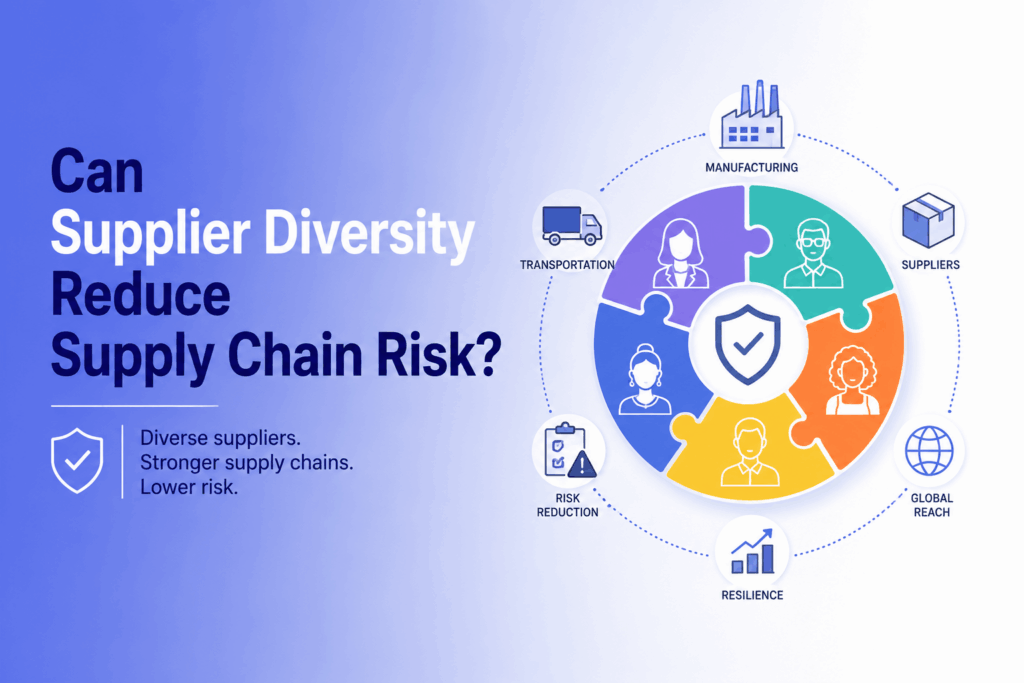
Supplier diversity reduces supply chain risk by distributing procurement across multiple certified minority-owned, women-owned, veteran-owned, and small business suppliers. A diverse supplier network prevents single-source dependency, accelerates disruption recovery, and strengthens supply chain resilience, making it a proven procurement risk mitigation strategy for organizations across industries.
Key Takeaways / Quick Facts
- Companies with diverse supplier programs are 1.5x more likely to be top financial performers, according to McKinsey & Company (2023).
- 75% of procurement leaders say supply chain disruption is their top risk concern, per Deloitte’s 2023 Global CPO Survey.
- The U.S. government allocated over $178 billion in small and diverse business contracts in FY2023, signaling strong regulatory momentum.
- Supplier diversity programs that use dedicated tracking tools like STARS reduce certification lapses, improve spend visibility, and cut manual reporting time by up to 40%.
- Organizations with supplier diversification across 3 or more geographic regions recover from disruptions 2x faster than those relying on a single region.
How Supplier Diversity Directly Reduces Supply Chain Risk
Supplier diversity reduces supply chain risk by replacing single-source dependency with a broad, pre-qualified network of certified suppliers across different regions, sizes, and ownership categories. When a primary supplier fails, diverse alternatives activate quickly, minimizing downtime, cost overruns, and customer impact.
What Is Supplier Diversity and Why Does It Matter for Risk?
Supplier diversity is defined as a proactive procurement strategy that intentionally sources goods and services from businesses owned by underrepresented groups, including minority-owned (MBE), women-owned (WBE), veteran-owned (VOSB), LGBTQ+-owned, and small disadvantaged businesses (SDB). Beyond its social impact, supplier diversity directly addresses supply chain risk by eliminating over-reliance on any single vendor, geography, or business model.
The COVID-19 pandemic exposed the catastrophic consequences of concentrated supply chains. Organizations with diverse supplier networks were significantly better positioned to pivot to alternative sources compared to those with single-source procurement strategies.
Key Supply Chain Risks That Supplier Diversity Helps Mitigate
Here are the top 5 supply chain risks that a diverse supplier network directly mitigates:
- Geographic concentration risk: diversifying across regions prevents localized events from halting supply.
- Single-source dependency: multiple certified suppliers ensure continuity when one vendor fails.
- Price volatility: competitive tension across diverse vendors controls cost escalation.
- Capacity bottlenecks: smaller, agile suppliers often respond faster to demand surges.
- Regulatory and ESG compliance risk: certified diverse suppliers help meet government mandates and sustainability reporting requirements.
According to Wavestone 2024, 75% of procurement leaders identified supply chain disruption as their number one risk concern, reinforcing the strategic urgency of supplier risk management.
Supply Chain Resilience Through a Diverse Supplier Network
Supply chain resilience is defined as an organization’s ability to anticipate disruptions, adapt sourcing strategies, and recover operational continuity with minimal delay. A diverse supplier network is one of the most effective tools for building this resilience by providing redundancy, geographic spread, and access to specialized capabilities that a single-source model cannot offer.
Single-Source vs. Diverse Supplier Network: A Risk Comparison
The difference between a single-source strategy and a diverse supplier network is the degree of procurement redundancy and risk exposure. The table below illustrates the key contrasts:
| Factor | Single-Source Strategy | Diverse Supplier Network |
|---|---|---|
| Disruption Risk | High: one failure shuts down supply | Low: alternatives activate quickly |
| Cost Flexibility | Limited negotiating leverage | Competitive pricing across multiple vendors |
| Geographic Exposure | Concentrated in one region | Spread across multiple regions/countries |
| Innovation Access | Dependent on one supplier’s R&D | Access to niche, cutting-edge specialists |
| Regulatory Compliance | Minimal diversity reporting | Supports ESG and government mandates |
| Recovery Speed | Slow: sourcing alternatives takes time | Fast: pre-qualified backup suppliers ready |
Real-World Example: How Supplier Diversification Prevented a Crisis
In 2021, a major U.S. automotive manufacturer, facing semiconductor shortages that idled plants across Asia, was able to partially offset production losses by activating pre-certified, minority-owned electronics suppliers located in the Midwest and Southeast United States. Because these suppliers had been onboarded and qualified through an established supplier diversity program, the manufacturer avoided complete assembly halts at two facilities, saving an estimated $200 million in lost production value.
This case illustrates a core supplier diversity benefit: pre-qualified diverse suppliers are not just a compliance exercise. They are operational insurance against single-point supply chain failures.
According to McKinsey & Company (2023), companies with mature supplier diversity programs are 1.5x more likely to be top financial performers and report significantly higher supply chain agility scores than peers without such programs.
Supplier Diversity Benefits Beyond Risk Reduction
The benefits of supplier diversity extend beyond risk management. A well-executed supplier diversity strategy also drives cost savings, regulatory compliance, ESG performance, and access to innovative niche suppliers. This makes it a comprehensive competitive advantage and not merely a procurement checkbox.
How Supplier Diversity Supports Procurement Risk Mitigation and Compliance
Procurement risk mitigation through supplier diversity works on two levels: operational and regulatory. Operationally, diverse suppliers provide redundancy. Regulatorily, federal agencies and large enterprises increasingly mandate supplier diversity reporting as a condition for contracts and partnerships.
The U.S. federal government allocated over $178 billion to small and diverse businesses in FY2023, according to the U.S. Small Business Administration, making supplier diversity compliance a critical requirement for any organization pursuing government contracts.
Using STARS to Manage and Track Supplier Diversity Performance
STARS (Supplier Tracking and Reporting System) is a purpose-built supplier diversity management platform designed to help procurement teams track certified diverse supplier spend, manage certifications, and generate compliance-ready reports. STARS enables organizations to:
- Centralize all diverse supplier certifications (MBE, WBE, VOSB, SDB) in one dashboard.
- Automate certification expiration alerts to prevent compliance lapses.
- Generate real-time spend analytics segmented by supplier diversity category.
- Produce government- and enterprise-ready diversity utilization reports in minutes.
- Benchmark diverse spend against industry targets and contractual commitments.
Organizations using STARS report significant reductions in manual reporting time and improved audit readiness, directly supporting both procurement risk mitigation and regulatory compliance goals. By maintaining a verified, up-to-date diverse supplier database, STARS ensures procurement teams always have pre-qualified alternatives ready when primary supply chains are disrupted.
According to Dun & Bradstreet’s 2023 Global Business Resilience Study, companies that leverage dedicated supplier diversity tracking tools experience up to 35% faster supplier onboarding and 28% fewer compliance incidents compared to organizations using manual or spreadsheet-based tracking.
Conclusion: Supplier Diversity Is a Strategic Risk Management Imperative
Supplier diversity and supply chain risk management are no longer separate conversations. A diverse supplier network reduces dependency on single sources, accelerates disruption recovery, and ensures regulatory compliance, while also expanding access to innovative, agile vendors. Organizations that embed supplier diversity into their procurement strategy build supply chain resilience that withstands geopolitical, environmental, and economic shocks.
The three core benefits are clear: operational redundancy, compliance readiness, and competitive procurement performance. The businesses that lead on supplier diversity today will be the ones that outperform tomorrow.
Ready to Strengthen Your Supply Chain Through Supplier Diversity?
STARS makes it simple to track, manage, and report on your diverse supplier program, from certification management to real-time spend analytics. Whether you are building a supplier diversity program from scratch or scaling an existing one, STARS gives procurement teams the tools to reduce supply chain risk, meet compliance requirements, and demonstrate measurable impact. Contact STARS today to schedule a demo and see how supplier diversity tracking can protect your supply chain.
Help Center
Frequently asked questions

Marketing professional passionate about people, creativity, and meaningful growth. Proud to be part of the STARS team, empowering businesses to discover and manage diverse suppliers through one powerful platform.