SBA Size Standards Explained: How to Verify a Supplier Is Really Small for Spend Reporting
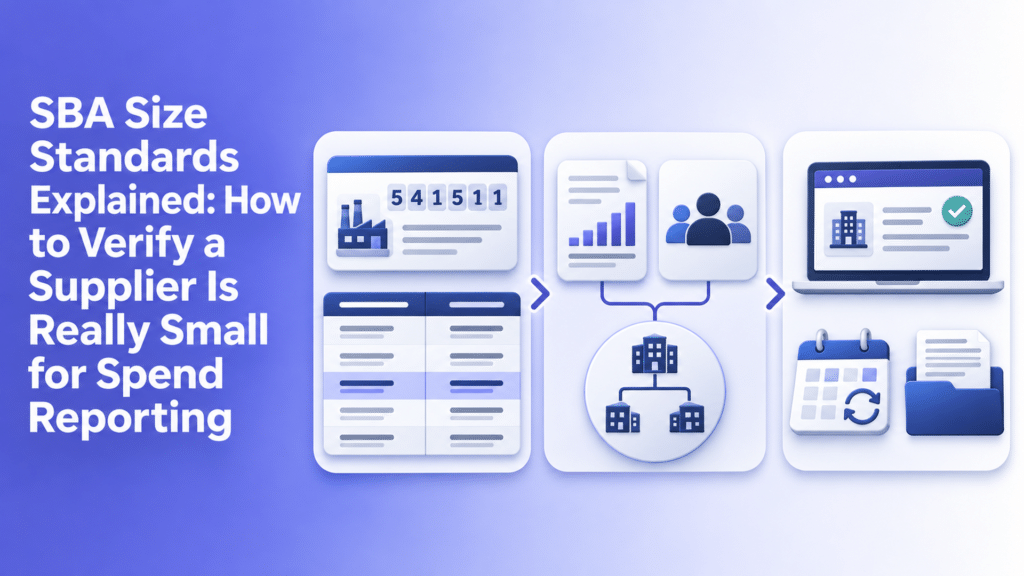
SBA size standards are defined as the maximum average annual receipts or average employees a business, including its affiliates, can have and still qualify as small in a specific NAICS industry. Before counting a supplier’s spend as small, procurement teams match its NAICS code to the SBA table and confirm its size and SAM.gov representation.
This guide covers how SBA size standards work, a five-step supplier size verification and what the 2026 proposal could change.
Key Takeaways
- SBA size standards set the largest a business can be, in average annual receipts or employees, and still count as small within a specific NAICS industry.
- Receipts are averaged over the past five years and employees over the previous 24 months, and both include the business’s affiliates.
- The same supplier can be small under one NAICS code and other than small under another, so the NAICS code tied to the purchase matters.
- Federal contractors self-certify their size in SAM.gov and must update that representation at least once a year.
- SBA proposed in August 2026 to consolidate nearly 1,000 size standards into 338, but current standards remain in effect until a final rule is issued.
What Are SBA Size Standards and Why Do They Matter for Spend Reporting?
SBA size standards are the official thresholds the US Small Business Administration uses to decide whether a business is small for federal programs and contracting. They are set by NAICS industry and expressed as average annual receipts or average employees. Spend reports that count suppliers as small without checking these thresholds can overstate small business spend and fail audits.
Small businesses make up almost the entire US business population. According to the SBA Office of Advocacy (2026), there are 36,207,130 small businesses in the United States, representing 99.9 percent of all businesses. That research figure, however, uses a broad statistical definition, not the industry-specific thresholds that govern contracting and spend credit.
Federal agencies apply the industry thresholds every day. According to Federal News Network (2026), agencies awarded 28% of all prime contracts, or $179 billion, to small firms in fiscal 2025. Enterprise, utility and health system buyers that report small business spend face the same size test.
Receipts-Based vs. Employee-Based SBA Size Standards
The difference between receipts-based and employee-based SBA size standards is the measure used. Receipts-based standards cap average annual revenue, while employee-based standards cap average headcount. Service industries mostly use receipts, and manufacturing and wholesale mostly use employees.
| Factor | Receipts-Based Standard | Employee-Based Standard |
|---|---|---|
| What is measured | Average annual receipts | Average number of employees |
| Measurement period | Past five completed fiscal years | Previous 24 months, per pay period |
| Typical industries | Services, construction, retail | Manufacturing, wholesale, mining |
| Current range | $2.25 million to $47 million | 100 to 1,500 employees |
| Affiliates included | Yes | Yes |
The measurement periods and ranges above come from the Congressional Research Service overview of size representations and protests, which cites 13 CFR 121.104 and 121.106.
How to Determine If a Supplier Meets SBA Size Standards
To determine whether a supplier meets SBA size standards, identify the NAICS code that matches what you buy, look up its size standard, compare the supplier’s average receipts or employees including affiliates, and confirm the supplier’s current representation in SAM.gov. Only then should its spend count as small business spend in your reports.
Here are the five steps procurement and supplier inclusion teams can follow before crediting spend:
- Assign the right NAICS code. Use the code that best describes the goods or services in the purchase or contract, not just the supplier’s headline industry.
- Look up the size standard. Find that code in the current SBA table of size standards and note whether it is measured in receipts or employees.
- Collect size data. Capture the supplier’s average annual receipts or average employees, along with any parent companies or affiliates.
- Check SAM.gov. For federally registered suppliers, compare your result with the size status the supplier represented in SAM.gov for that NAICS code.
- Document and refresh. Record the source, the date and the code used, and repeat the check at least once a year or after a merger or acquisition.
How Do You Do a NAICS Size Standard Lookup?
A NAICS size standard lookup starts with the six-digit NAICS code for the work. You then find that code in the SBA size standards table, or the SBA online size standards tool, to see its threshold. For example, a staffing firm and a software developer will each face a different receipts limit.
Because one supplier can sell under several codes, store the size result per NAICS code in your vendor master.
How Does Affiliation Affect Small Business Classification?
Affiliation affects small business classification because SBA counts the receipts or employees of a business together with those of its affiliates. A supplier owned or controlled by a larger parent can exceed its size standard even if its own revenue looks small, so ownership data is part of every size check.
Watch for acquisitions, private equity investments and new parent entities in your supplier records, and flag those suppliers for a fresh size review.
Why Supplier Size Verification Fails Without Clean Data
Supplier size verification fails without clean data because duplicate records, outdated revenue figures, missing NAICS codes and unknown parent companies all lead to the wrong answer. Even organizations with strong contracting oversight misreport small business spend when vendor master data is incomplete or never refreshed after ownership changes.
The cost of those errors is measurable. According to GAO (2025), the National Nuclear Security Administration and six of its contractors incorrectly reported $1.1 billion of their $16.8 billion in small business contracts awarded in fiscal years 2018 through 2022. Size credit is only as reliable as the supplier data behind it.
Common Supplier Size Verification Errors in Vendor Masters
The most frequent errors procurement teams find during a small business classification review include:
- One supplier recorded under several names or tax IDs, each with a different size status
- A size flag set at onboarding years ago and never rechecked
- A NAICS code that does not match the goods or services actually purchased
- Small status kept after the supplier was acquired by a large company
- Self-reported size with no link to SAM.gov or a certifying agency
The STARS guide to why data quality is the biggest challenge in supplier diversity reporting covers these issues in more depth, and our comparison of data cleansing vs. data enrichment explains which fix applies to each one.
What the 2026 Proposed Changes to SBA Size Standards Could Mean
The 2026 proposed changes to SBA size standards would consolidate nearly 1,000 industry-specific standards into 338, raise many receipts thresholds and move several industries, including construction, to employee-based standards. The proposal is not final, and existing size standards remain in effect unless and until SBA issues a final rule.
SBA published the proposed rule and a revised methodology on August 20, 2026. According to Mayer Brown (2026), SBA estimates that approximately 114,541 net additional firms would qualify as small, including 37,002 existing federal contractors.
The proposal has also drawn heavy feedback. According to Inside Government Contracts (2026), SBA had received 2,117 comments by September 21, most of which opposed the proposals as drafted. SBA then extended the comment period to November 20, 2026, as Clark Hill also reported.
How Should Procurement Teams Prepare for New SBA Size Standards?
Procurement teams can prepare by keeping NAICS codes, receipts, employee counts and parent company data current for every supplier now. If a final rule raises thresholds, those teams can rerun size classifications quickly and see which suppliers become small, instead of rebuilding data under deadline pressure.
During the transition, report under current standards and model the proposed standards for planning only.
How STARS Supports SBA Size Standards Verification and Reporting
STARS supports SBA size standards verification by cleaning and enriching the supplier master so each record carries validated certifications and business classifications. Its Data Scrubbing & Enrichment service de-duplicates records, standardizes data and validates suppliers against the open web and external databases.
STARS states that its multi-point process delivers 98% supplier data accuracy, combining automated AI validation with manual verification. It connects to ERP, AP and CRM systems such as SAP, Oracle and Coupa, and enriches small, diverse, local and sustainable supplier data. Clean records then feed Tier 1 Spend Analytics so small business spend is reported from verified classifications.
Case Study: Supplier Size Classification for a Midwest Insurer
In a STARS case study with a leading Midwest insurance company, STARS scrubbed a supplier master of 4,689 records, removed 160 duplicates and 17 invalid entries, and classified the remaining 4,512 suppliers using SAM, supplier self-certifications and verification through SBA, WBENC and NMSDC. The supplier master reached 99 percent data accuracy, and reporting moved from weeks of manual effort to an automated process.
For a broader view of finding small suppliers already in your spend, see finding hidden small business enterprises through data enrichment.
Conclusion: Make SBA Size Standards Part of Every Spend Report
SBA size standards decide whether a supplier’s spend truly counts as small business spend. Match each purchase to the right NAICS code, verify receipts or employees including affiliates, and confirm SAM.gov status every year. Clean, enriched supplier data prevents costly misreporting. Track the 2026 proposal, but keep reporting under current standards until a final rule is issued. Because rules and effective dates can change, confirm specifics with counsel or your compliance advisor.
Ready to verify supplier size with confidence? Contact STARS to see how STARS Data Scrubbing & Enrichment keeps your small business classifications accurate and audit ready.
Help Center
Frequently Asked Questions About SBA Size Standards for Suppliers
Related posts:
 Why Supporting Small Businesses Is a Smart Procurement Strategy for Supplier Diversity and Growth
 How to Build a Small Business Sourcing Program That Strengthens Supplier Diversity
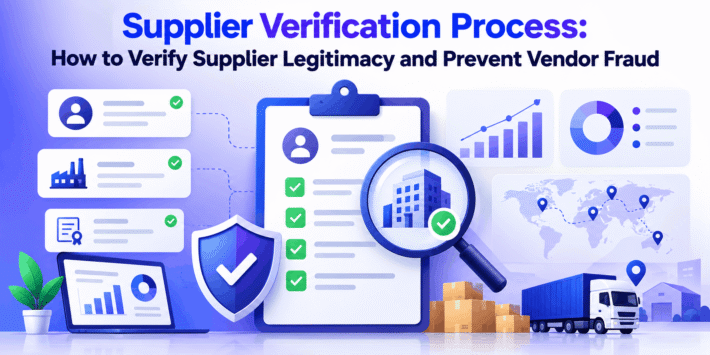
 Supplier Verification Process: How to Verify Supplier Legitimacy and Prevent Vendor Fraud (A Practical Checklist)
Powered by YARPP.

Marketing professional passionate about people, creativity, and meaningful growth. Proud to be part of the STARS team, empowering businesses to discover and manage diverse suppliers through one powerful platform.